Transformation Summer Camp 2026: Taking research further together with society
![[Translate to English:] Gruppenbild Transformation Summer Camp 2026](/fileadmin/_processed_/f/8/csm_Gruppenbild_Foto_MariaBartholomaeus_0d3d3a4bfd.webp)
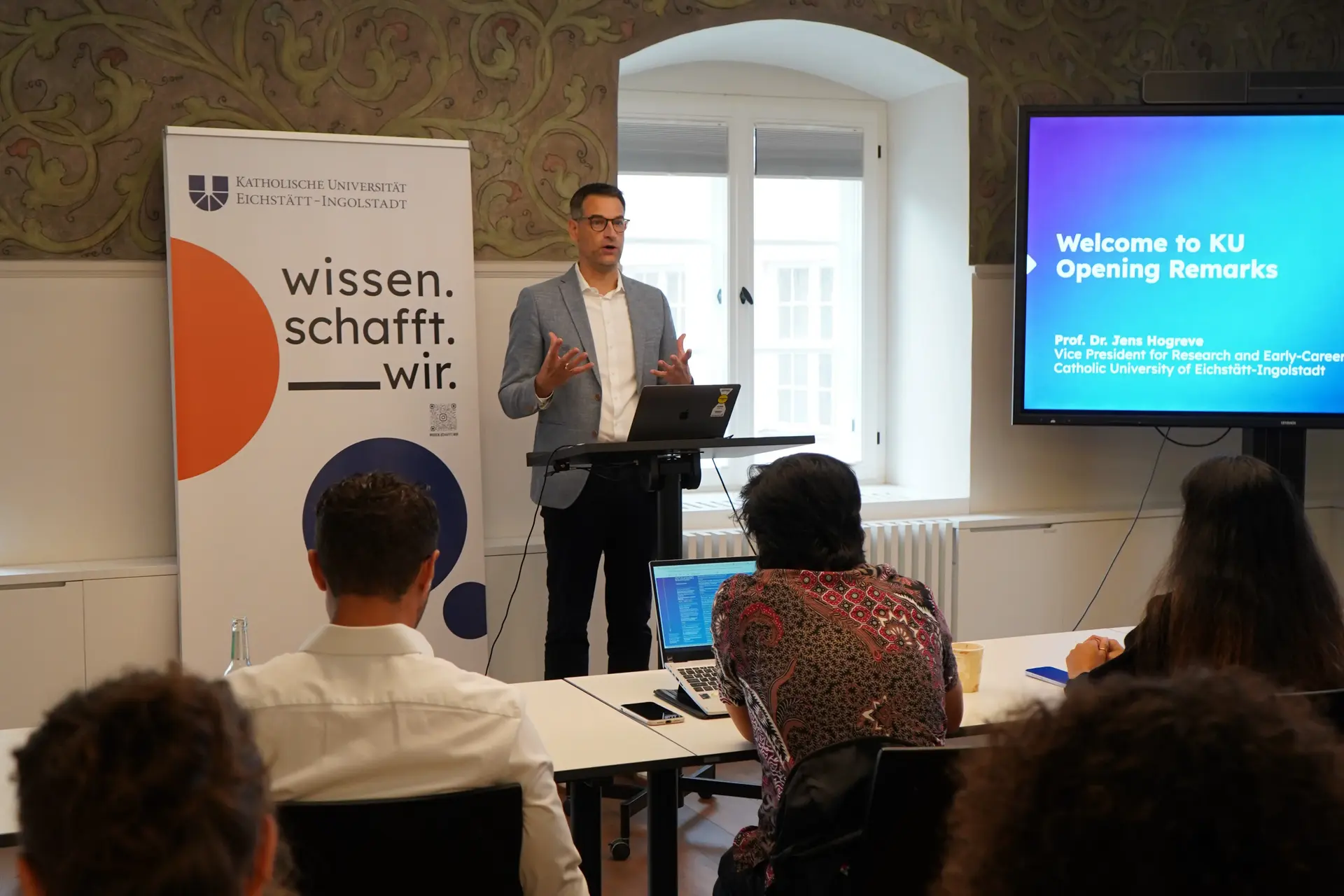
The focus was not limited to participatory research methods such as Citizen Science, Photovoice, design thinking, and arts-based research. In particular, the participants discussed how participation can be structured in a practical setting, what differing interests come into play, and how scientific quality can be combined with social relevance. In his opening remarks, KU Vice President Prof. Dr. Jens Hogreve summed up this goal: "The goal is not only to discuss existing research, but also to help you develop your own ideas into well-founded, original, and socially relevant research proposals."
Practical examples complemented the academic perspectives: Among other things, the Nuremberg citizen science project “Nürnberg forscht” was presented. A visit to the Gostenhof Superblock in Nuremberg also transformed the urban space itself into a space for research and experience. KU projects such as “Eichstätt – A space for Everyone”, in which young people examined how public space is used, whose needs are reflected in it, and whose perspectives receive less attention, also highlighted the opportunities and challenges of participatory research.
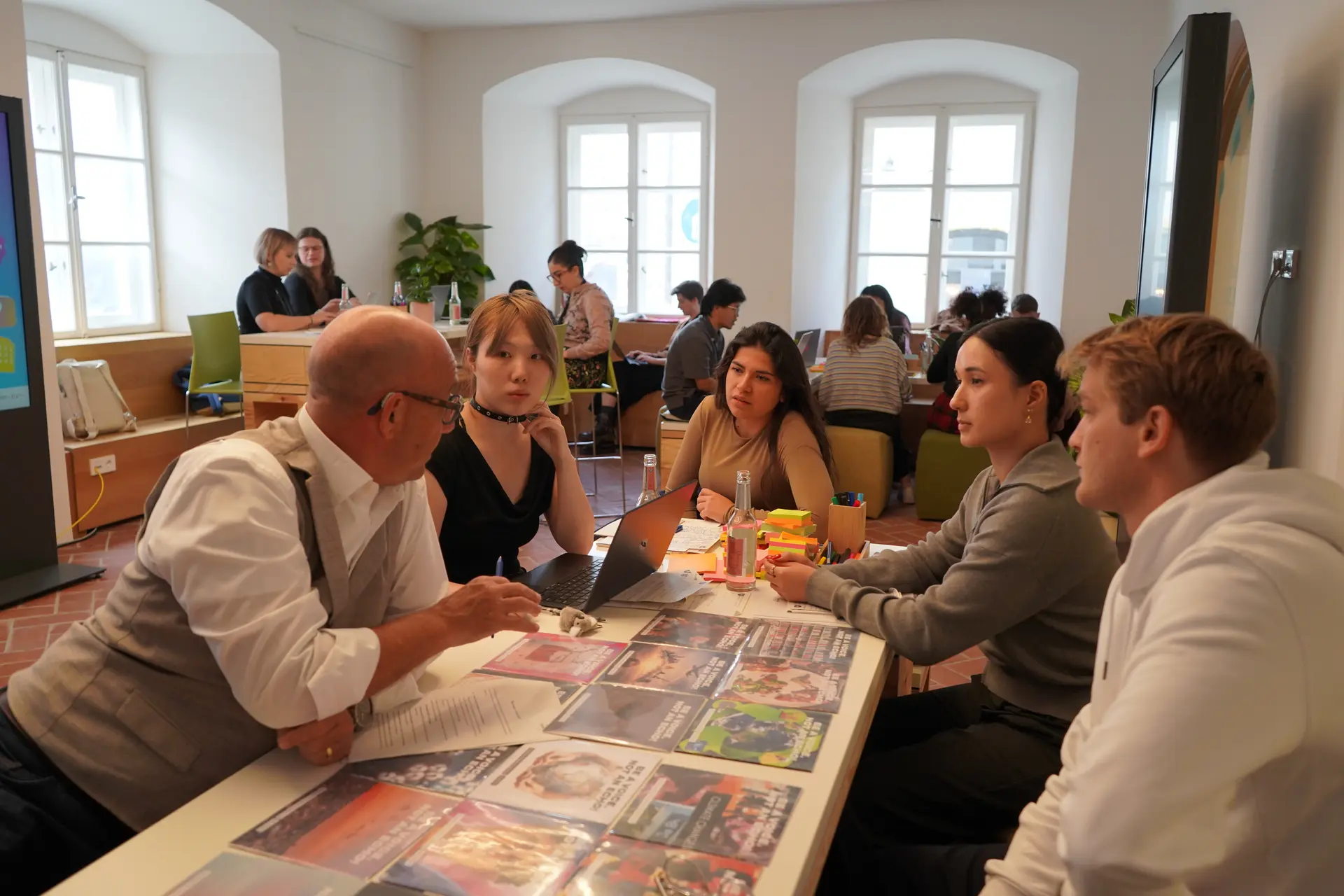
In workshops and collaborative work sessions, the participants further developed their own research ideas. Among other things, the discussion focused on incorporating local knowledge into climate research, involving young people and caregivers, and including marginalized groups. What they had in common was the question of how people can not only be the subject of research but also participate in the creation of knowledge.
The camp thus combined scientific expertise, practical experience, and hands-on experimentation. The goal was to encourage young researchers to rethink research – as a process in which people outside the academic community are actively involved and in which different forms of knowledge come together. For the young researchers, however, the strong sense of community was the camp’s greatest benefit. The Transformation Summer Camp therefore meant much more than just imparting knowledge about participatory research. It was intended to create a space where early-career researchers can broaden their own research perspectives, gain practical experience, and reflect together on how research involving people and for society can be shaped.
The Transformation Summer Camp was conceived and organized at the KU as part of the “Mensch in Bewegung II” transfer project. The KU's Citizen Science Lab played a key role. The camp was supported, amongst others, through a collaboration with the citizen science platform “mit:forschen!”, which had already been involved in developing the format.
Text: Melena Renner
Translation: Sylvia Schmager
Photos: Maria Bartholomäus