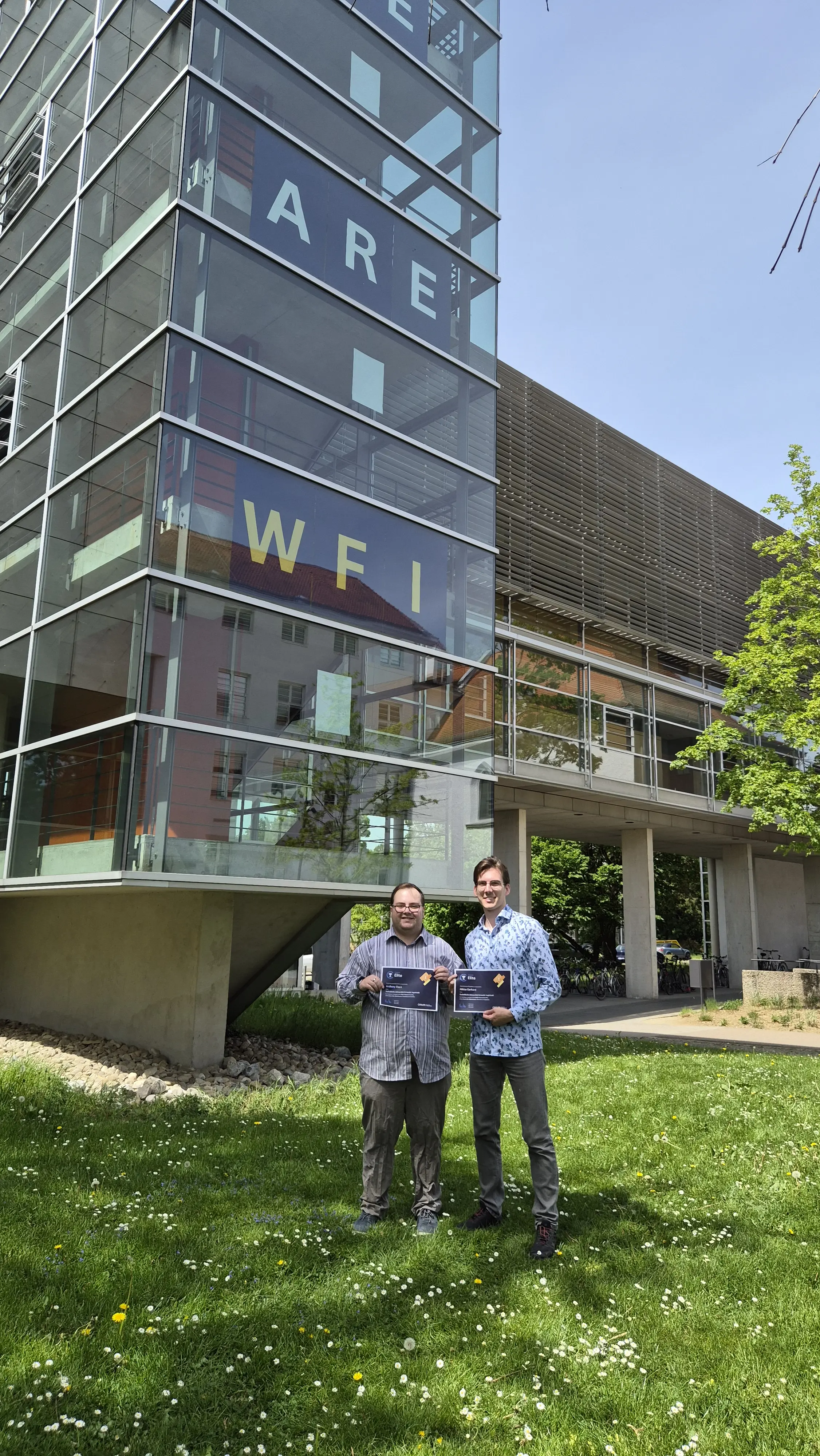
Cesim Elite is an international business simulation competition in which students run their own virtual companies and make decisions in the areas of strategy, marketing, and finance. A total of 21 teams from twelve different countries took part. The competition, which took place online, spanned seven simulation rounds from April 20 to 26, 2026, with each round representing a fiscal year and decisions for that year having to be made on a daily basis. Each round brought new market conditions and updated market analyses, to which the teams had to respond quickly and based on data. The goal was not only to keep an eye on the market, but also to closely analyze competitors’ strategies – for example, whether they had introduced similar products, lowered prices, or increased their marketing spending.
The WFI team "AEGIS" managed a fictional soft drink company in the FMCG (Fast-Moving Consumer Goods) sector. The company operated in two markets simultaneously: an established European market and a growing emerging market. The product portfolio included six different beverage products, for which the students had to determine not only the price and packaging but also the selection and quality, as well as specific product characteristics such as "light/diet," "health," or "organic." The products were specifically tailored to four customer segments whose preferences and priorities changed from round to round and had to be taken into account anew each time. “In each round, we made strategic decisions regarding product development, pricing, advertising, distribution channel management, and research and development”, explains Anthony Ebert. “We placed a special focus on our sustainability strategy: "We made decisions regarding supplier selection, packaging concepts, labor policies, and sustainability certifications, all of which were factored into our ESG assessment."
Success is measured by the stock price, which reflects the company's overall performance. The ESG rating – which takes into account environmental, social, and governance criteria and rewards sustainable business practices as a distinct factor –also contributed to the company’s success. The WFI team “AEGIS” took first place, followed by the “HKA” team from Karlsruhe University of Applied Sciences in second place and the “BITS” team from UKSW University of Warsaw (Poland) in third place.
“The simulation was an intense and educational experience that really brought us together as a team”, Ebert says of the competition. It was particularly challenging to strike a balance between short-term profitability and long-term strategy, for example through consistent investment in research and development, which only paid off in later stages. “Making data-driven decisions under time pressure and adapting our strategy round by round to a changing market environment and the moves of our international competitors was an experience that taught us a great deal for our future careers”, says Ebert. The keys to the WFI team’s success were a diversified product portfolio, a balanced investment strategy in advertising and sales channels, and an early focus on sustainability – driven both by the team members’ personal convictions and as a strategic advantage in certain customer segments.
By finishing in first place in the EMEA qualifiers, the three students have qualified for the Cesim Elite World Championship, which will take place in June. There, they will represent the KU on a global level.
WFI team wins Cesim Elite Marketing Simulation