


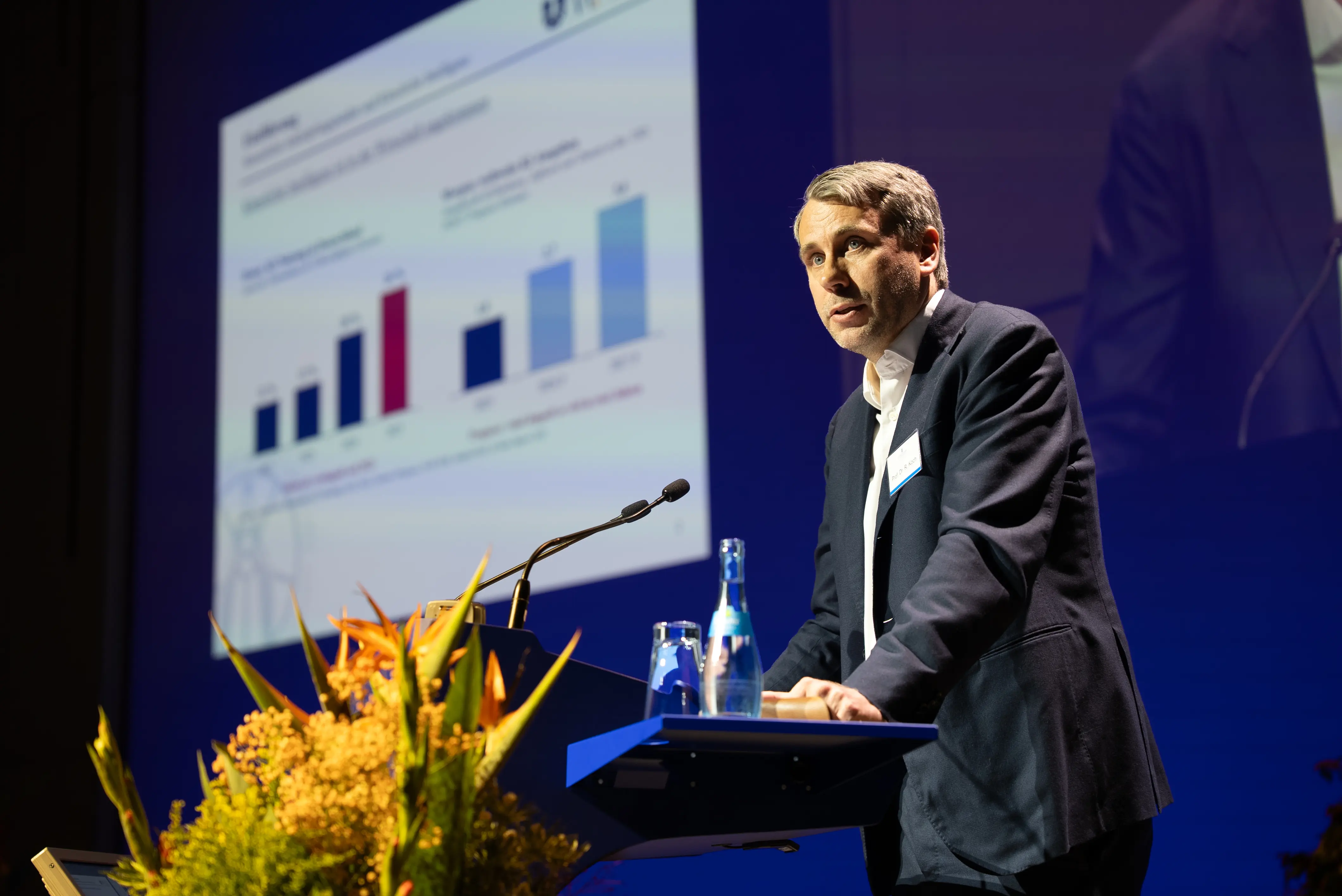
At the Stuttgart Tax Advisors' Congress 2026, the WFI professor explored how the growing use of artificial intelligence is changing the international taxation of corporate profits.
Where should corporate profits be taxed when artificial intelligence (AI) increasingly takes over tasks traditionally performed by humans? This was the key question addressed by Prof. Dr. Reinald Koch from the Ingolstadt School of Management (WFI) at the Catholic University of Eichstätt-Ingolstadt at the Stuttgart Tax Advisors' Congress 2026.
Many international tax law provisions are based on human activities and physical presence. This applies, for example, to determining the place of effective management, establishing permanent establishments and allocating corporate profits internationally. However, the growing use of AI is increasingly challenging these traditional principles.
When AI systems independently make decisions, conclude contracts or perform business functions, it becomes increasingly difficult to attribute the resulting economic value creation to a specific country. This raises new questions about the application and further development of international tax law.
Drawing on practical examples, Prof. Dr. Koch highlighted the challenges this development poses for businesses, tax advisors and legislators. A key focus was whether the existing principles of international corporate taxation can still adequately address the economic changes brought about by AI.
His central argument: The more AI decouples economic value creation from human labour, the more pressing the question becomes whether international corporate taxation should increasingly be based on the location of customers and sales markets.


