Humaira Rasuli has been living in exile since the Taliban took power in August 2021. From there, she works closely with a team of psychosocial counselors in Afghanistan. In several provinces, they offer support to women and girls who are suffering from the consequences of violence, war, difficult living conditions, or family conflicts. Each year, the organization provides individual and group support to more than 2,000 people affected by trauma, helping them process their traumatic experiences, develop their own coping strategies, and strengthen their mental well-being. “Humaira Rasuli impresses with her courage, her clear stance, and her steadfast commitment to justice”, said Ulrike Schurr-Schöpfel, spokesperson for the Shalom Working Group, explaining the decision to honor her as this year’s award winner. “Especially at a time when women in Afghanistan are being systematically deprived of their rights and, at the same time, there is discussion here in Germany about deportations to that country, we want to use this award to send a message of solidarity.”
Shalom Prize awarded to Afghan human rights activist Humaira Rasuli
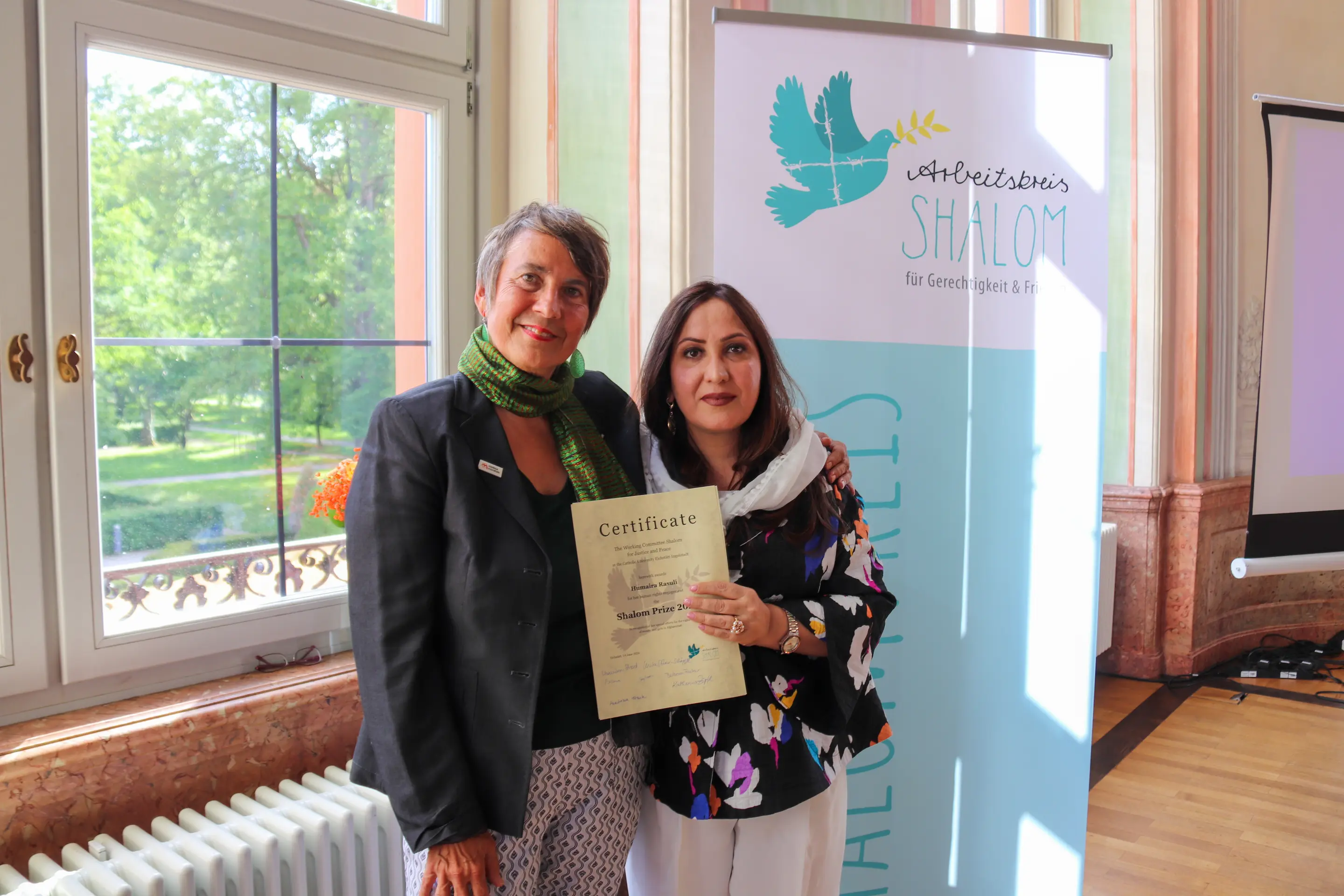
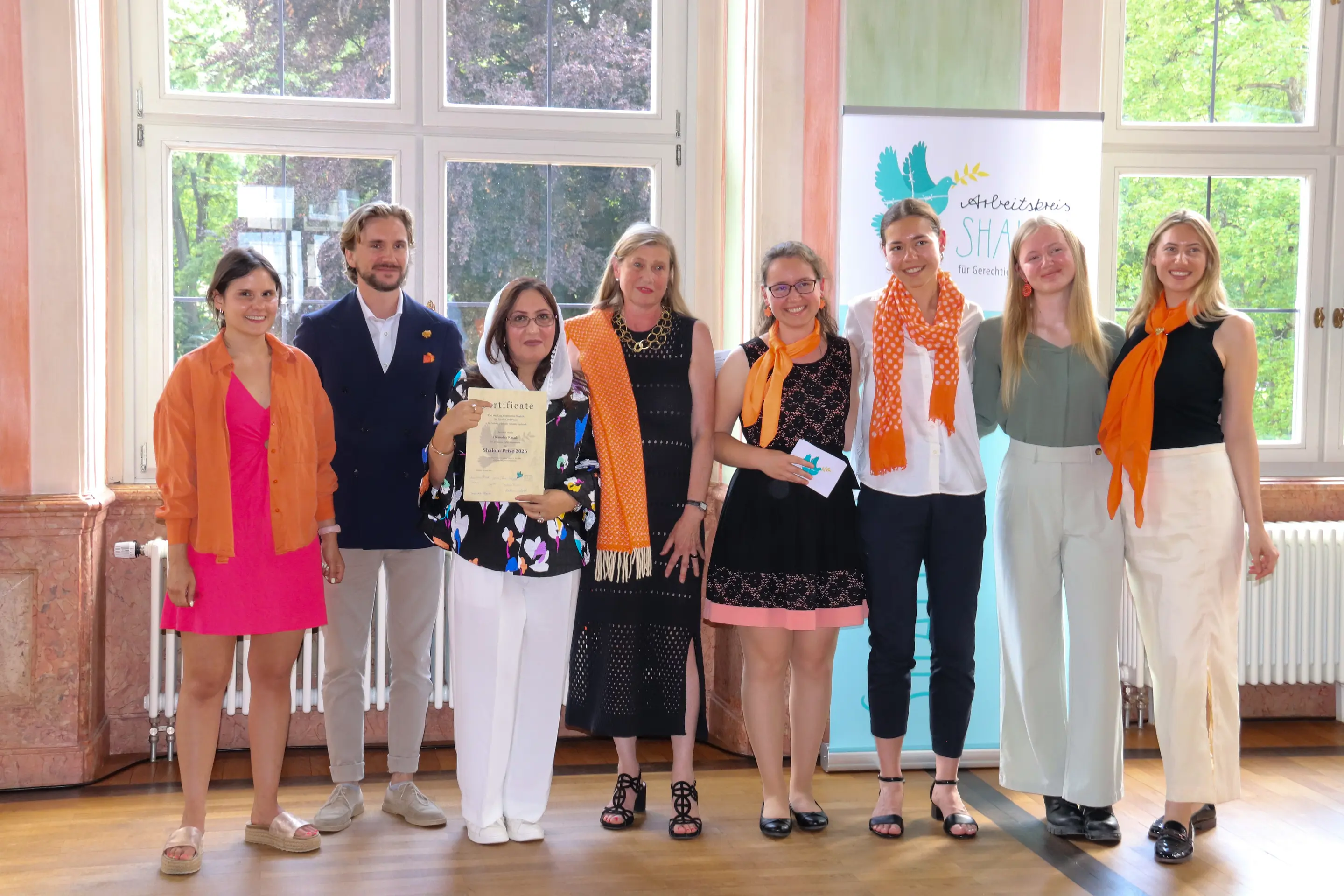
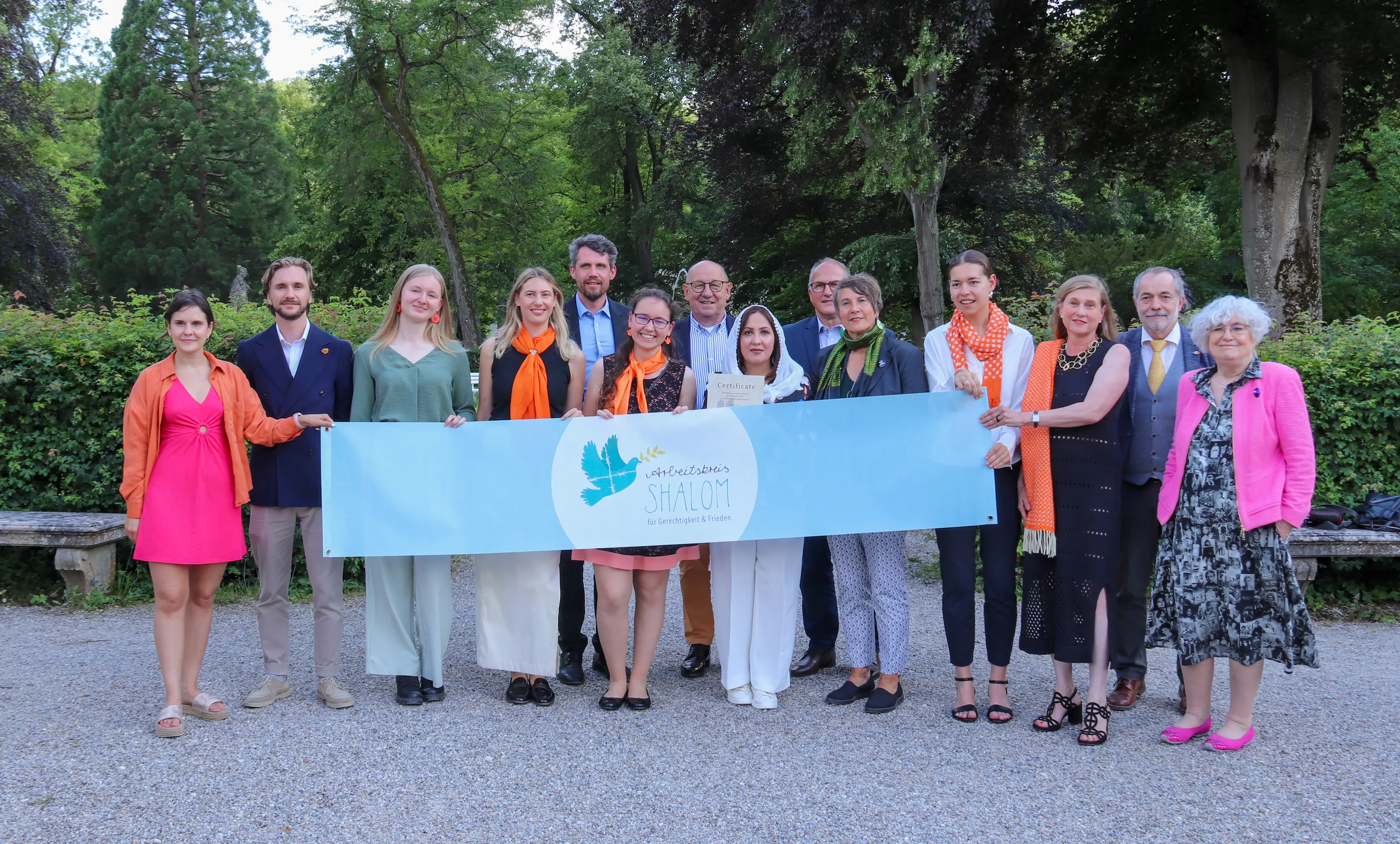
![[Translate to English:] Der AK Schalom mit der diesjährigen Preisträgerin Humaira Rasuli (vorne Mitte).](/fileadmin/_processed_/1/3/csm_Schalompreis_6ec9b091ac.webp)
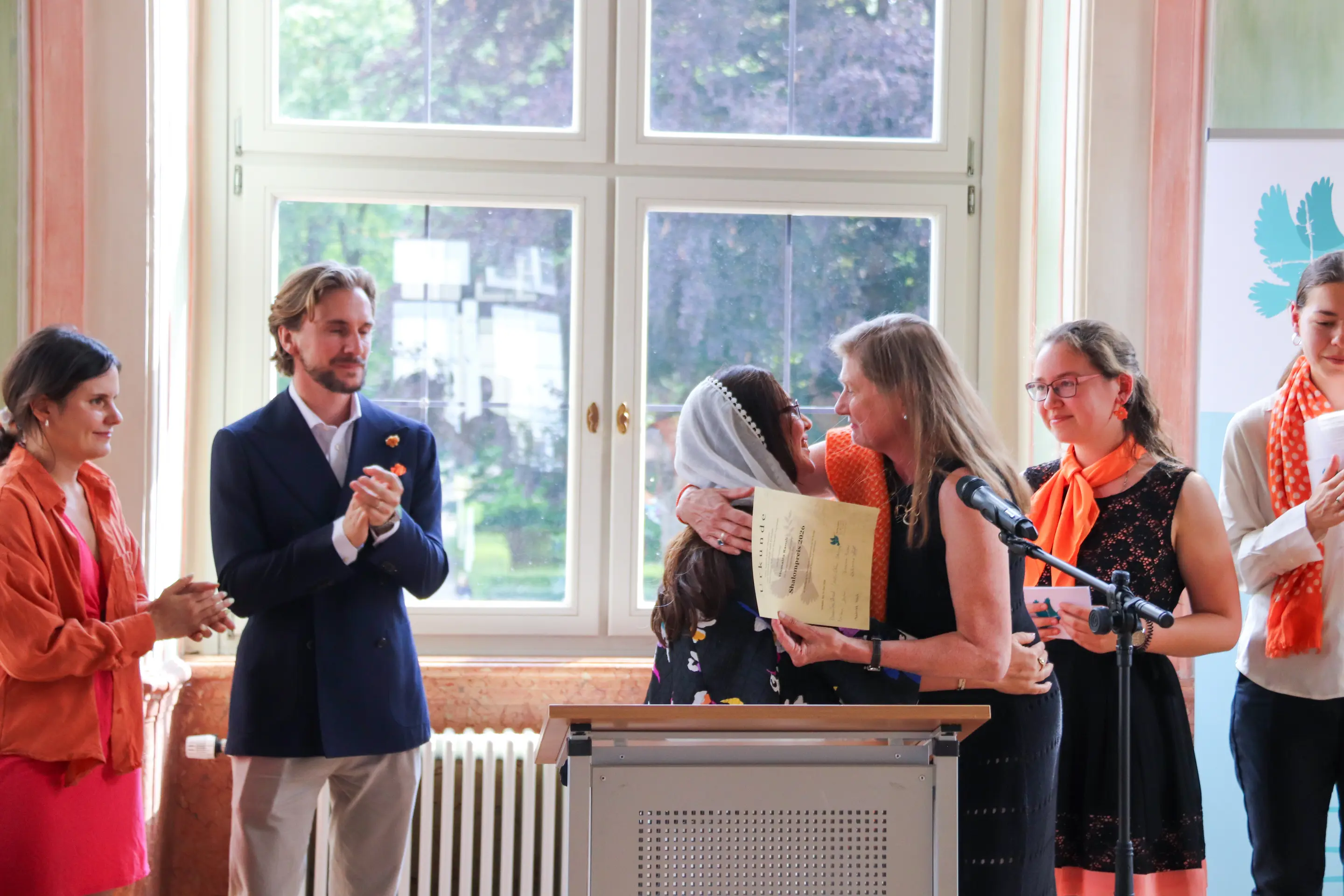
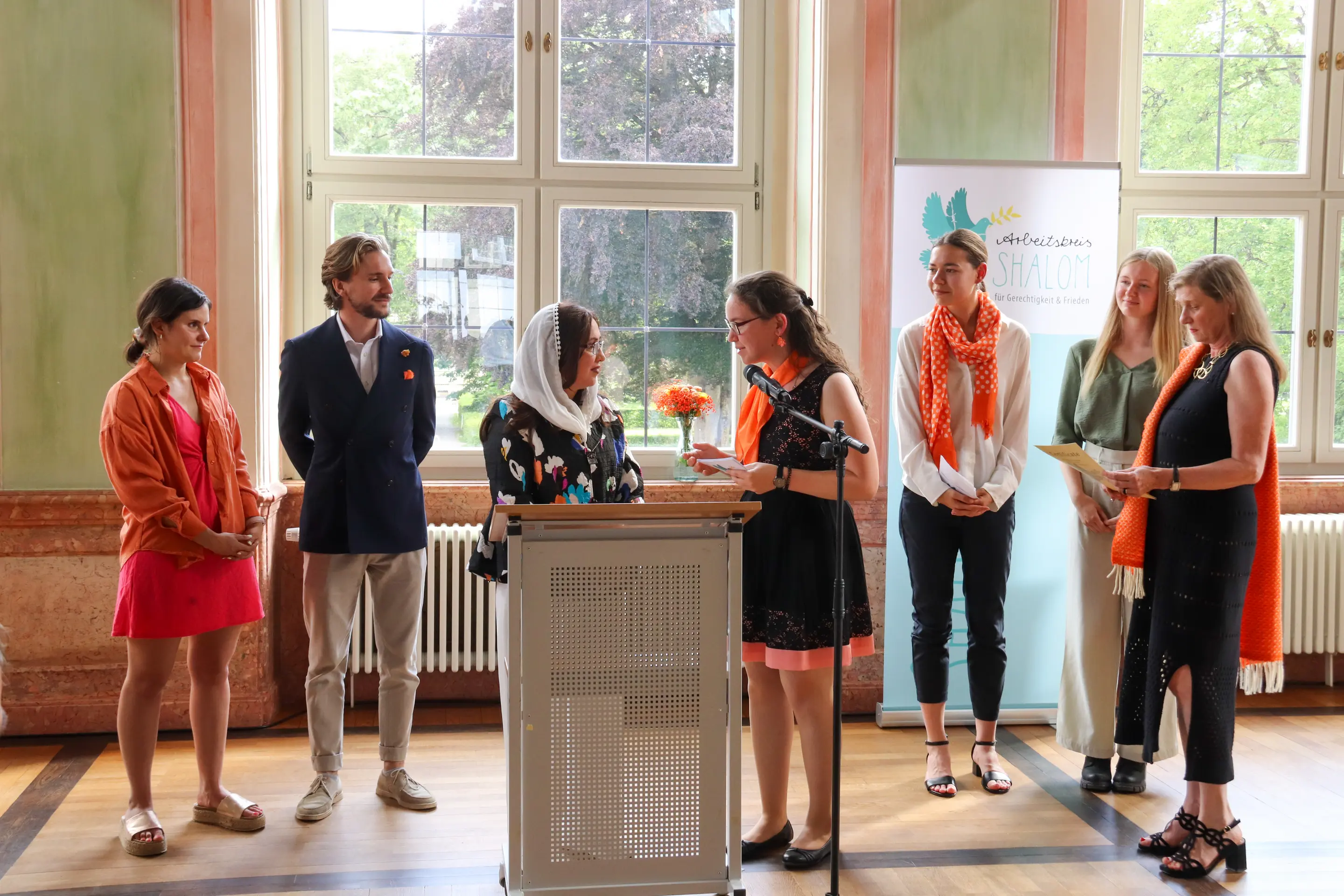
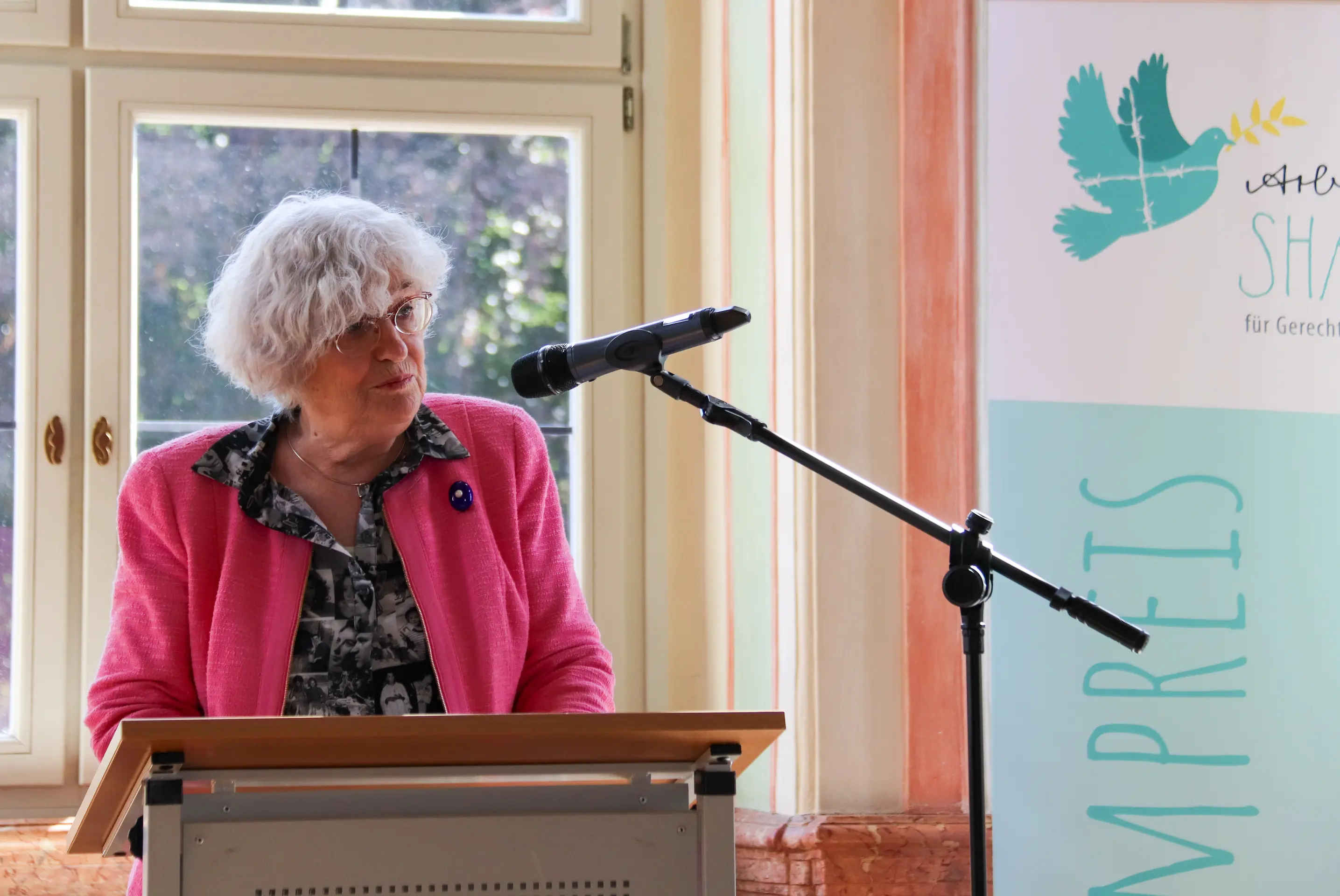
Numerous guests from the University, the local community, the church, and the political sphere attended the awards ceremony in the Holzersaal at the KU. The laudatory speech was delivered by women’s rights activist Dr. Monika Hauser, founder of the women’s rights organization “Medica Mondiale”, who has long supported Rasuli’s work. “We are honoring a woman who, in one of the most challenging situations of our time, has time and again chosen not to look away, but to take responsibility”, Hauser said. She recalled that Rasuli had to flee Afghanistan for the first time when she was still a teenager and began supporting other women while in exile in Pakistan. Later, Rasuli returned to her home country and studied law and political science. As a lawyer, she represented victims of gender-based violence – a cause that also made her a target herself. In addition, she worked on legislative reforms and passed on her knowledge to young female lawyers. “When the Taliban seized power, everything Humaira had built up over the years came crashing down overnight”, Monika Hauser explained. And yet she found the courage to continue her advocacy for women from exile. “Humaira Rasuli shows us that even in the darkest moments, there is room for the future, and that we all have a choice: Whether to look toward it or look away.”
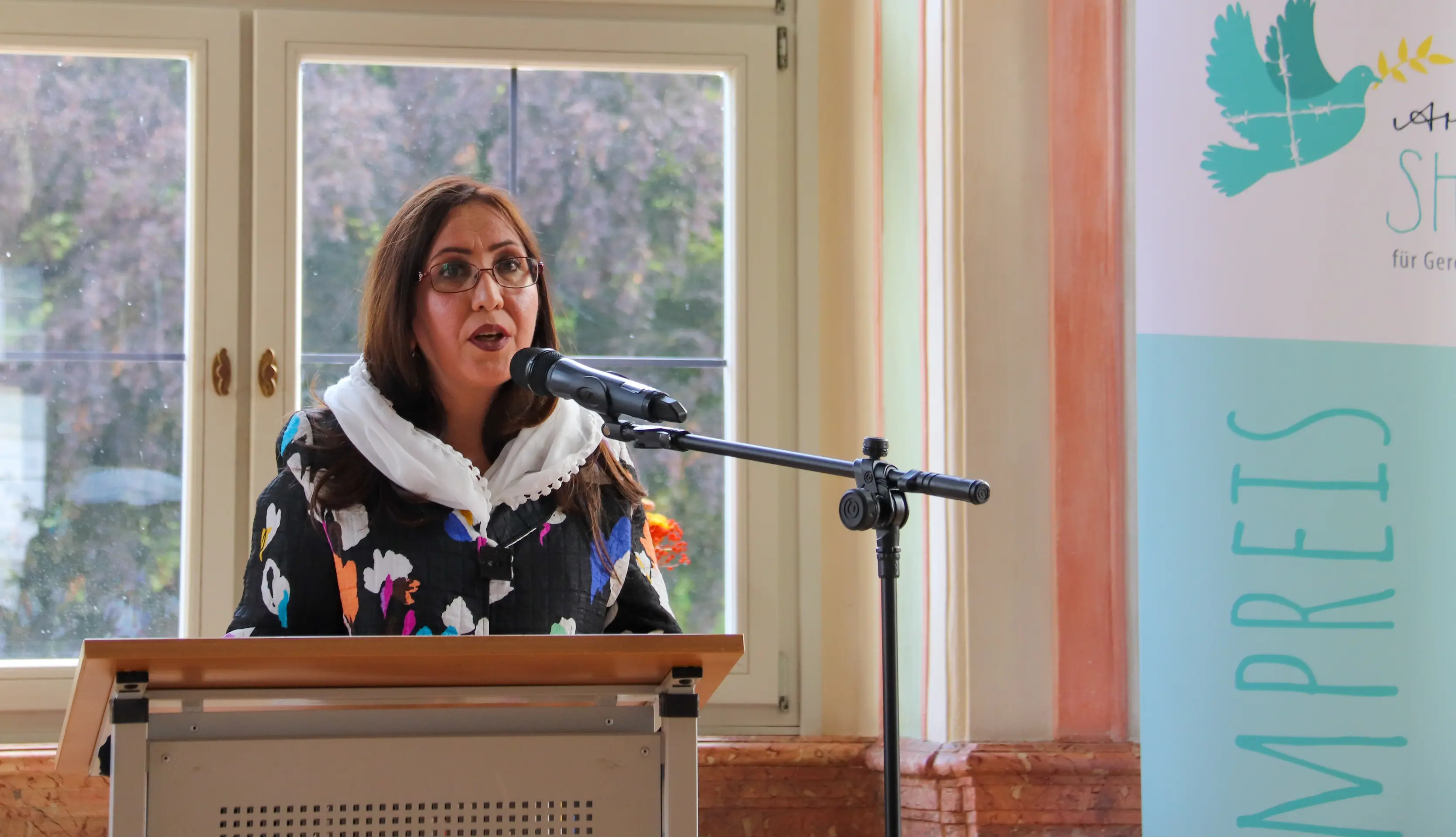
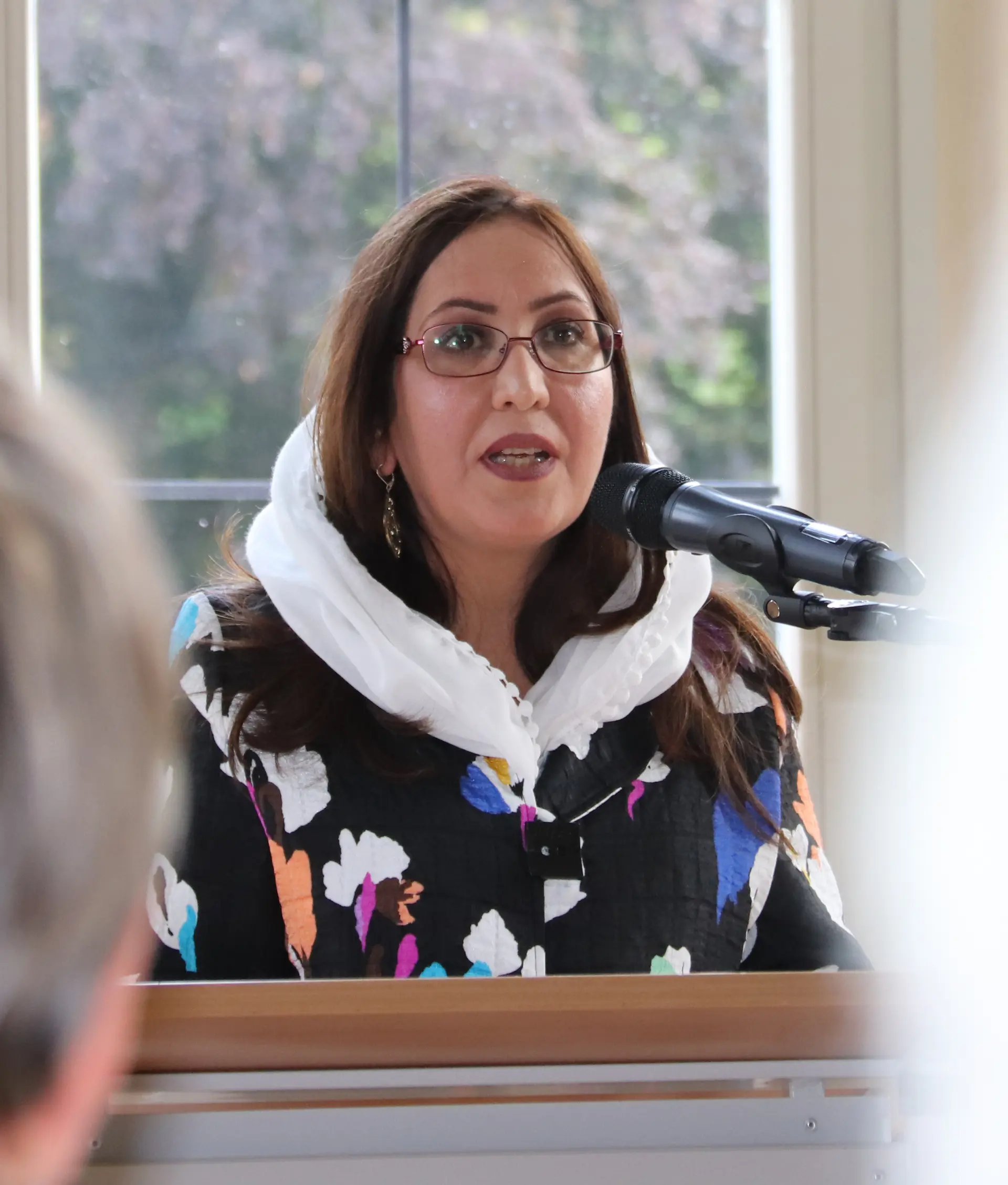
In her acceptance speech, Rasuli gave a vivid account of the situation in Afghanistan. She spoke of women and girls who are denied education and participation in society, of economic hardship, and of a political system that systematically marginalizes women from public life. At the same time, she sought to present a nuanced picture of her home country and her religion. "The extremists in Afghanistan have hijacked Islam and ill-used it for their own purposes." But according to Islam, women have the same rights. Women are allowed to work, study, and hold government office", Rasuli said. She called on the international community to hold the Taliban accountable and not to lose sight of Afghanistan: “Afghanistan must not be the only nation in the world to deny girls and women the right to education a second time.” Education is the key to sustainable development.
The award winner received international recognition through a video message from Richard Bennett, the UN Special Rapporteur on Afghanistan. “The Shalom Prize honors not only her remarkable achievements, but also the courage of countless Afghan women who are tirelessly and peacefully fighting for justice, equality, and human rights under exceptionally challenging circumstances”, Bennett said.
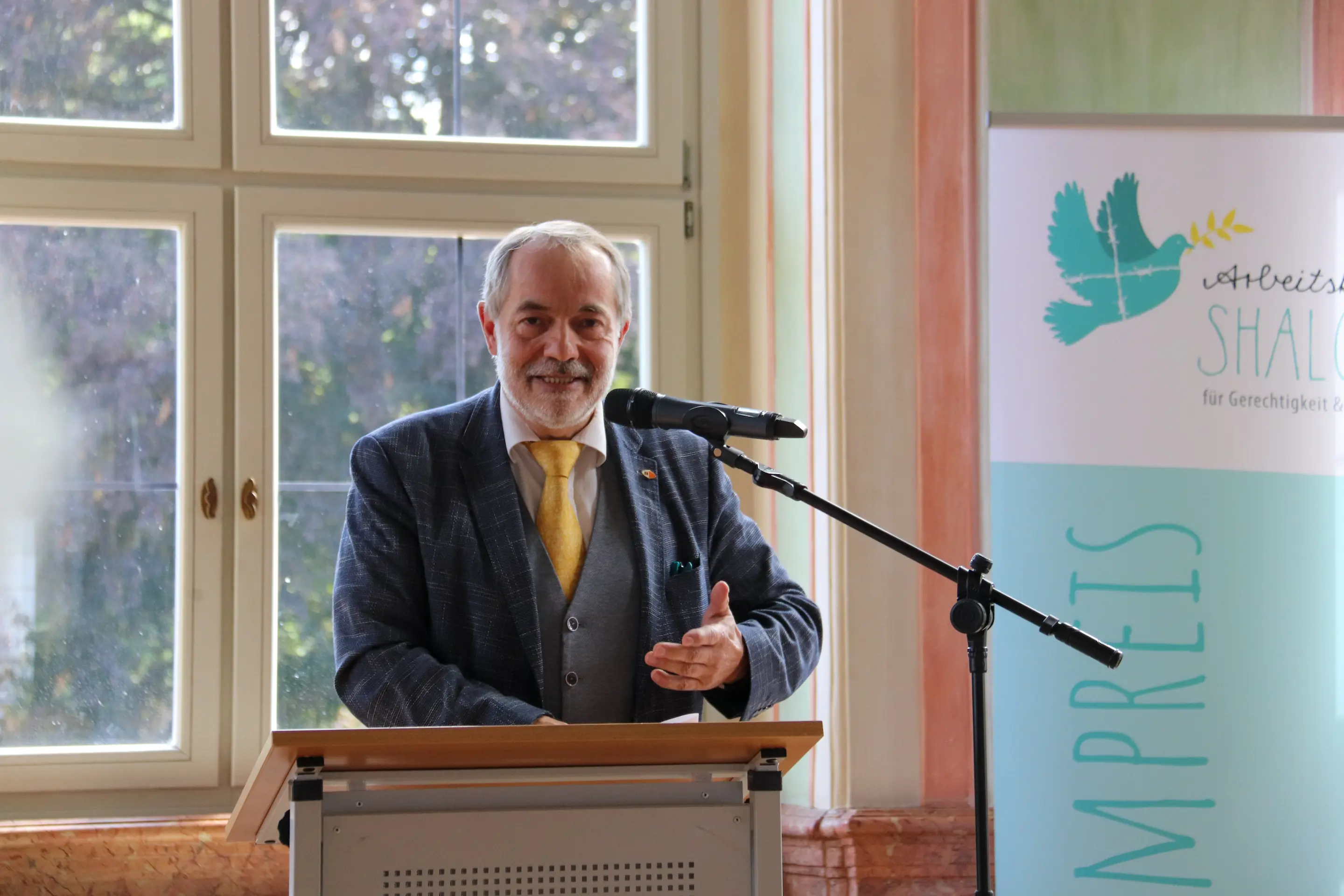
The guests in attendance also joined in expressing their admiration for her courage and her work. Dr. Gerhard Rott, head of the Department for the Universal Church at the Diocese of Eichstätt, said: “What we can learn from the award winner is the importance of investing in education, in young people, and in their skills.” Barbara Loos, Chairwoman of the KU University Council, expressed her great admiration for Humaira Rasul’s commitment and saw it, in a broader sense, as a call to action for the KU as a socially engaged University: “The increasing violence against women, even in the Western world, and the growing disregard for a system based on human rights in general require us to stand up to it courageously.” Josef Grienberger, mayor of Eichstätt and patron of the Shalom Campaign, noted that there are currently 239 people from Afghanistan living in Eichstätt and emphasized: "We must remind ourselves every day of our privileges and of the treasure we have in being able to live in this free democracy."
The Shalom Prize is funded entirely by donations; in recent years, approximately 30,000 euros in donations have been raised each year. Everyone involved works on a volunteer basis. In addition to students, the working group AK Shalom includes alumni and employees of the KU as well as residents of Eichstätt. Donations are being collected through the end of the year to support the work of Humaira Rasuli and her team.