250 years after American independence, the United States is facing fundamental questions about the state of its democracy. Prof. Dr. Jens Temmen, an American studies scholar at the Catholic University of Eichstätt-Ingolstadt, characterizes the developments under Donald Trump as an expression of a deep political crisis that extends far beyond a single presidency. He investigates the historical patterns, authoritarian tendencies, and transnational interconnections that emerge in this context.
As the United States celebrates its 250th anniversary these days, this milestone comes at a time of profound political uncertainty. According to Prof. Dr. Jens Temmen, who holds the Chair of American Studies at the KU, the Trump administration is making an obvious attempt to govern the country in an authoritarian manner – that is, bypassing legal norms and, in some cases, acting against the will of the people. Behind this lies the desire to restructure the political system in such a way that it is possible to govern without relying on existing institutions – or, if necessary, entirely without them.
For Temmen, however, this development should not be viewed merely as a rupture. Anyone who wants to make sense of the current crisis must place it within a broader historical context. From this perspective, Trump appears not only as a catalyst but also as an expression of continuities that have long shaped the history of the United States. These included, for example, structural racism and Christian nationalism. That is precisely why it would be an oversimplification to explain the current situation solely with a single presidency. Rather, older lines of conflict as well as new political dynamics became more pronounced within it.
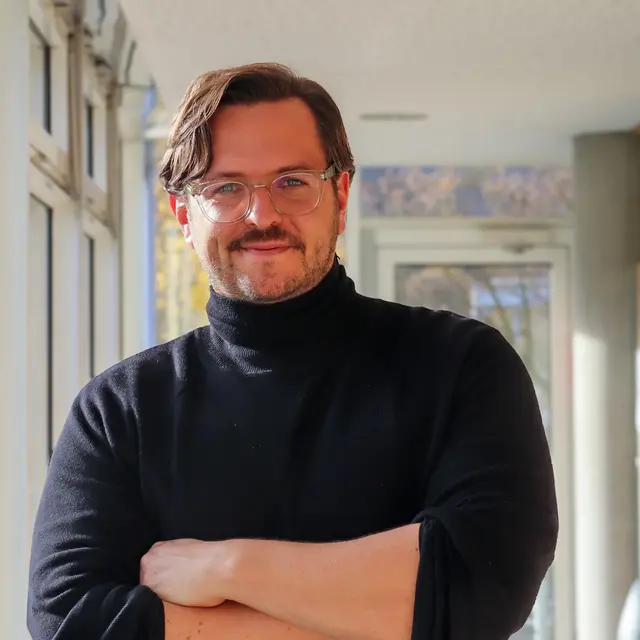
Prof. Dr. Jens Temmen
For Jens Temmen, this leads to a more fundamental observation: According to the cultural and literary scholar, the widespread image of the United States as a model of democracy was too simplistic from a historical perspective. “The U.S. as a flawless democracy – that is simply not something you can say about its entire history”, says Temmen. In Germany, in particular, the image of a model democratic nation is strongly shaped by the postwar order. This refers to the role of the United States as a protective power and transatlantic partner after the end of World War II.
According to Temmen, understanding current political developments requires “a broader historical perspective.” The current crisis affects not only day-to-day politics, but also fundamental questions about the nature of American democracy. This is most clearly illustrated by the question: "Are we currently witnessing the end of American democracy? Is what is happening in the U.S. an exceptional phenomenon, or is it the logical outcome of a longer process?" The intensity of the current conflict lies precisely in the fact that it leaves the question of how resilient the country's democratic institutions still are unanswered.
At the same time, Temmen does not view developments in the U.S. in isolation. Rather, the political crisis there is closely linked to a shift to the right on the international stage. The MAGA movement and far-right actors in Europe are linked through transnational networks, exchange ideas, and learn from one another. What is currently being observed in the U.S. with a certain degree of detachment could therefore quickly become a political reality in Europe as well.
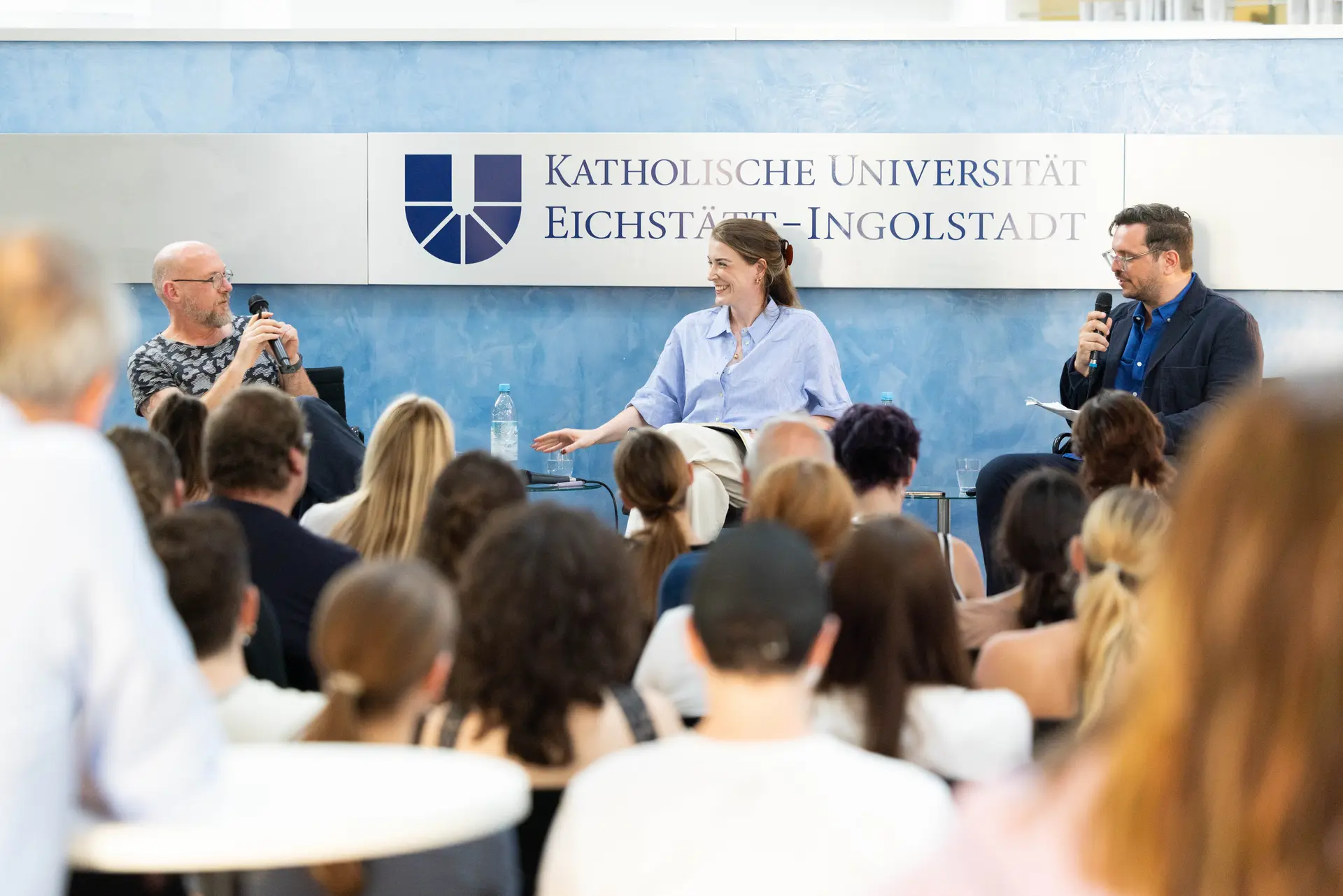
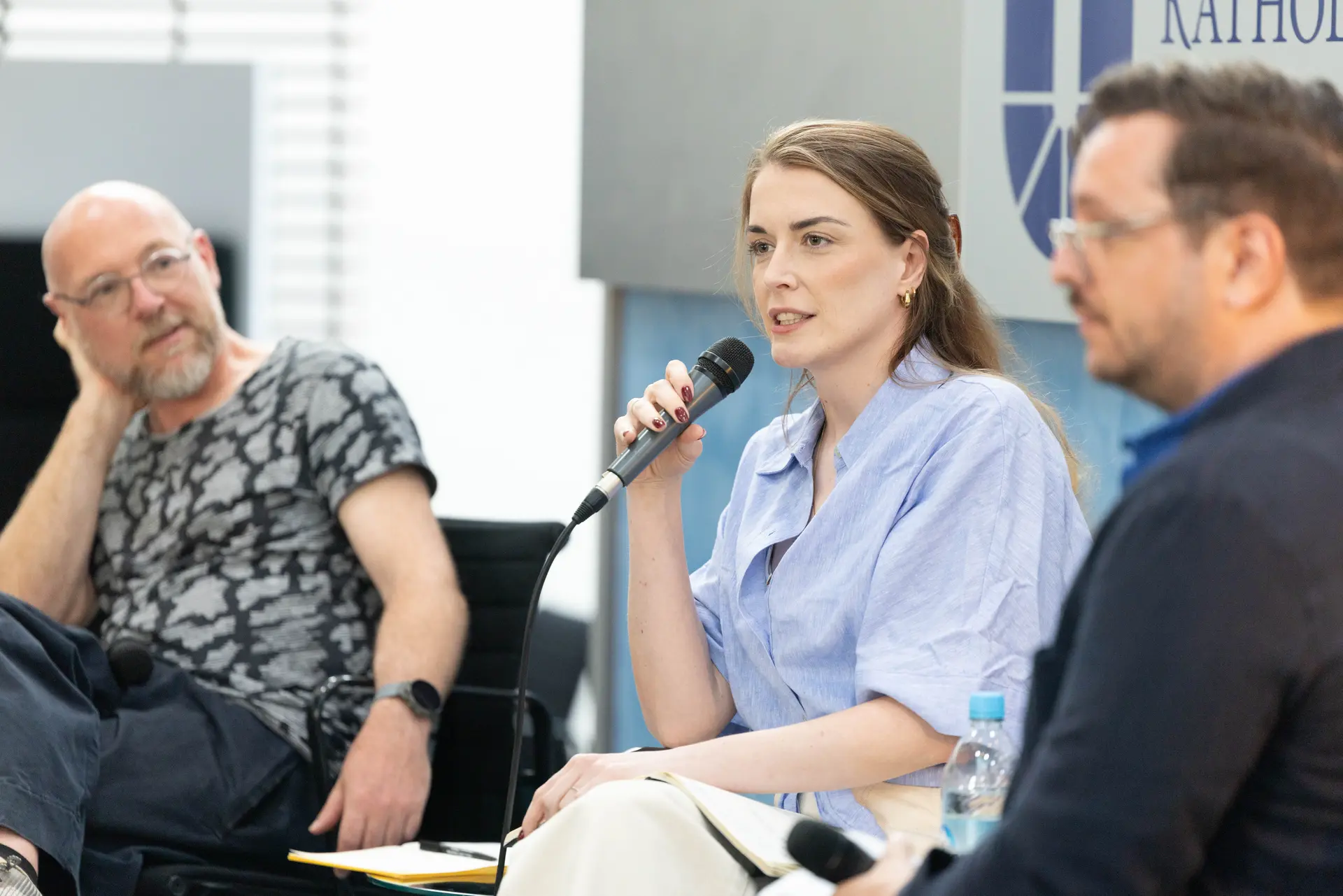
The 250th anniversary of the Declaration of Independence on July 4 is a historic milestone of special symbolic significance for the United States. It is thus not only an occasion to look back on the country’s founding history, but also to reexamine fundamental questions about democracy, authoritarianism, and historical continuities. The event “The Authoritarian States of America? 250 Years of the U.S. and the Trump Presidency.” addressed specifically these questions. The panelists were Annika Brockschmidt and Simon Strick. Journalist, author, and podcaster Annika Brockschmidt is considered an expert on the religious right and Christian nationalism in the U.S., topics she explores in depth through her journalistic work, podcasts, and several books. Simon Strick is a scholar of culture and media studies whose research focuses, among other things, on right-wing affect politics, digital fascism, and racism and gender in contemporary media cultures.



![[Translate to English:] US-Congress](/fileadmin/_processed_/6/5/csm_AdobeStock_649204885_8de78505c3.webp)