“Safeguarding the human”: Voices on Pope Leo’s encyclical
![[Translate to English:] Papst Leo](/fileadmin/_processed_/4/6/csm_Papst_LeoXIV_2025_DBK_Jessica_Kraemer-3_db27a95580.webp)
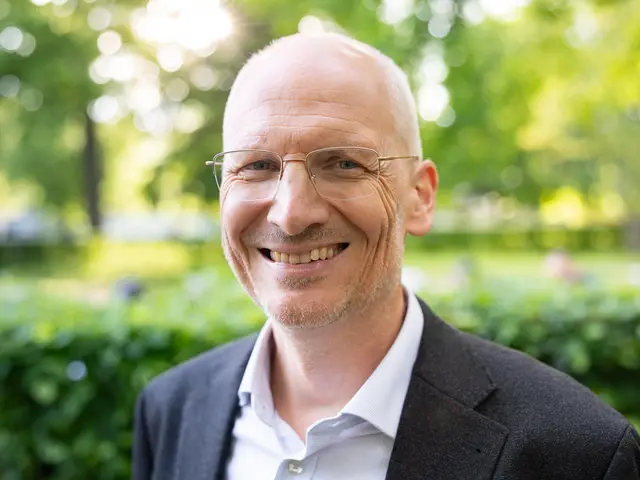
Martin Kirschner, Professor of Theology in Contemporary Processes of Transformation, emphasizes above all the politically prophetic clarity of the text. In his view, Leo XIV, with his encyclical, follows in the tradition of Catholic social teaching – that is, those Church documents that respond to the social consequences of major upheavals. For Kirschner, the key point is that the Pope links the ethical assessment of technology to the question of power. “When addressing AI and new technologies, the Pope consistently asks who holds control and decision-making power, what interests these technologies serve, and who benefits from them.” When the Pope speaks pointedly of the need to “disarm AI,” he is targeting criticism of monopolies and a “culture of power” that affects “issues of truth, communication, and democracy” and culminates in “war and escalating violence.”

Katharina Karl, Professor of Pastoral Theology and Dean of the Faculty of Theology, interprets “Magnifica humanitas” primarily as a text exploring the view of humanity underlying the AI debate. From her perspective, Pope Leo does not speak first and foremost about the Church or technology, but about human beings and their responsibilities. It is particularly important to her that the Pope does not link human dignity to achievement or superiority, but rather to vulnerability and finitude. “According to Leo, what makes a person great is not their superiority, but their vulnerability, which is part of their dignity and must be protected.” At the same time, Karl does not shy away from criticism. The call to “safeguarding what makes us human” is central, but it is not limited to AI.
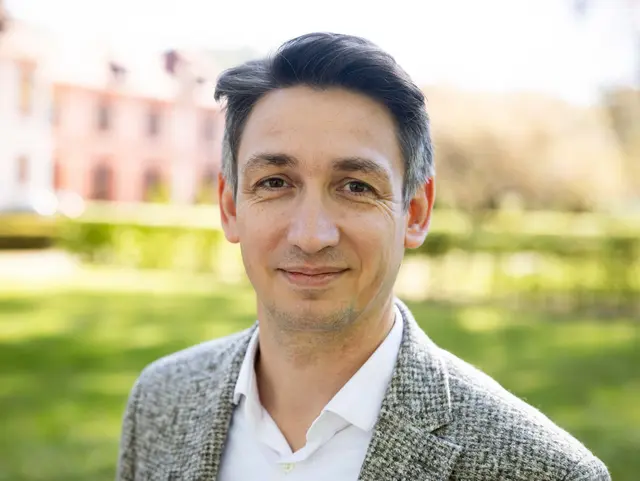
Norbert Paulo, Professor of Philosophy and the Ethics of Digitalization, takes a more nuanced view at the encyclical. He does emphasize, however, that “Magnifica humanitas” is not a blanket rejection of modern technologies: “The encyclical does not take a culturally pessimistic view of artificial intelligence and digitalization.” Nevertheless, in his view, the text remains too vague in key areas. While problematic developments are identified, they are often described only in general terms. Paulo views the symbolic juxtaposition of Babel and Jerusalem with particular skepticism. “As powerful as this symbolism may be, its escalation remains problematic.” His conclusion is correspondingly unemotional: "The encyclical, however, is still searching for the right lens through which to clearly see the positive aspects and find the right path within the realm of ideals."
![[Translate to English:] Martin Schneider](/fileadmin/_processed_/d/4/csm_Martin_Schneider_Geraldo_Hoffmann_1fa80119c4.webp)
Martin Schneider, Professor of Moral Theology and Social Ethics, sees the strength of the encyclical in its description of the social consequences of digital governance. For Schneider, it is less about technology in the narrow sense and more about how technology changes society. Pope Leo describes a new problem in great detail: Power often becomes invisible in the digital realm. “Power often appears invisible because algorithms feign neutrality, even though they embody interests, preconceived notions, and value judgments.” Another strength is that the encyclical consistently asks questions from the perspective of those affected: Who will be excluded? Who is losing control over data, work, and the public sphere?

Markus Riedenauer, Professor of Philosophical Questions of Theology, also places the encyclical within a broader historical context. For him, Pope Leo continues to articulate principles regarding human dignity, justice, and responsibility in the context of digitalization and AI. At the same time, Riedenauer warns against attributing characteristics that are unique to human beings to technical systems, as the encyclical explains. Talking about “artificial intelligence” can be misleading because, while such systems process data and recognize patterns, they lack experience, conscience, and genuine understanding. It is therefore crucial that moral responsibility not be handed over to technology. “The key question is how power is exercised”, he writes, and what view of humanity shapes the digital order.
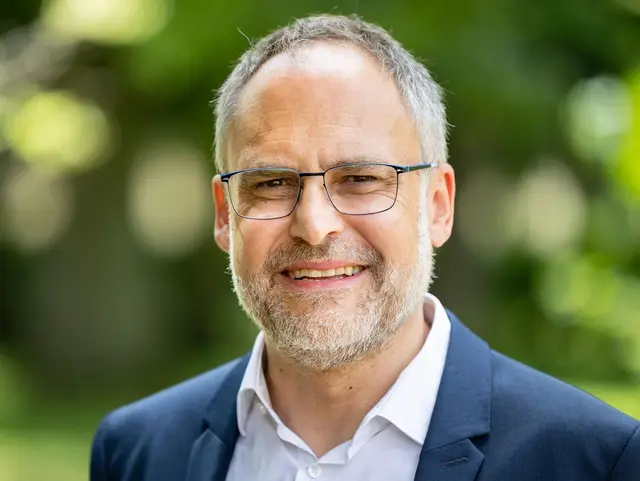
Journalism professor Klaus Meier adds another perspective. He sees the encyclical as a clear continuation of the ideas developed during Pope Francis’s pontificate. In this context, Meier refers to a conversation that took place at the Vatican in March 2025: At the time, he was in Rome with the KU Presidium, where he discussed a Vatican document on the relationship between artificial and human intelligence with Irish Curia Bishop Paul Tighe of the Dicastery for Culture and Education. “Key elements from that note are now included in the encyclical”, says Meier. At the same time, it is a significant sign that Pope Leo is now also explicitly addressing the regulation of AI and the power of large technology companies. Meier places particular importance on the view of the media and journalism. He sees the encyclical’s description of truth as a “common good” and its explicit recognition of independent journalism as a strong sign – especially in a digital public sphere where disinformation is on the rise and reliable media outlets are coming under pressure.
Despite all the differences, the assessments have one thing in common: The debate over AI has long since become more than just a technical issue. It is about power and responsibility, inclusion and exclusion, truth, control, and human dignity. Or, as Kirschner points out, the question of “who holds the control and decision-making power in each case.” The strength of “Magnifica humanitas” lies in the fact that it does not leave these questions solely to experts in technology, politics, and business, but rather makes them the subject of a broad societal discussion.