The US attack on Venezuela and its consequences – from the perspective of a Latin American studies scholar
The new year has started with a geopolitical turning point: On the night of January 3, the USA attacked Venezuela, captured President Nicolás Maduro and his wife and brought them both to the USA. US President Donald Trump justified the action with the fight against drug networks and announced his intention to lead Venezuela himself for the time being.
At the same time, the Venezuelan Supreme Court appointed the former Vice President Delcy Rodríguez as interim president. Critics condemn USA's actions as contrary to international law and see Trump's real goal as controlling the country's oil reserves. Dr. Mariah Freitas Monteiro, research associate at the Chair of Latin American History at the Catholic University of Eichstätt-Ingolstadt (KU), explains the current situation in Venezuela and the rest of Latin America in this interview.
How have the Venezuelan people responded to the events of the last few days?
FREITAS MONTEIRO: In Caracas in particular, there were demonstrations in support of Nicolás Maduro and against his imprisonment and that of his wife Cilia Flores. However, these mobilizations fell well short of earlier phases of Chavism. Rallies that welcome and openly support Maduro's loss of power are still being suppressed. The political instability is also fueling concerns about the supply of basic foodstuffs. The Venezuelan diaspora must also be taken into account when considering the question regarding the Venezuelan people: Around 8 million people, about 20 percent of the population, have left the country in recent years. Accordingly, there have also been significant reactions outside Venezuela, for example in cities such as Bogotá, Buenos Aires, Madrid and New York, where there have been various demonstrations for or against Donald Trump's intervention, sometimes at the same time in different places. In the absence of reliable quantitative data on public opinion, social networks act as a central arena for debating narratives and interpretations. However, this reveals more nuances than a simple polarization. The nature of Maduro's arrest — bombings, deaths, the violation of sovereignty and Trump's statements on oil — reinforces this ambivalence. Opinions arise in which the celebration of Maduro's loss of power does not automatically go hand in hand with approval of US intervention, especially as there is no clear US strategy to support a democratic new order.
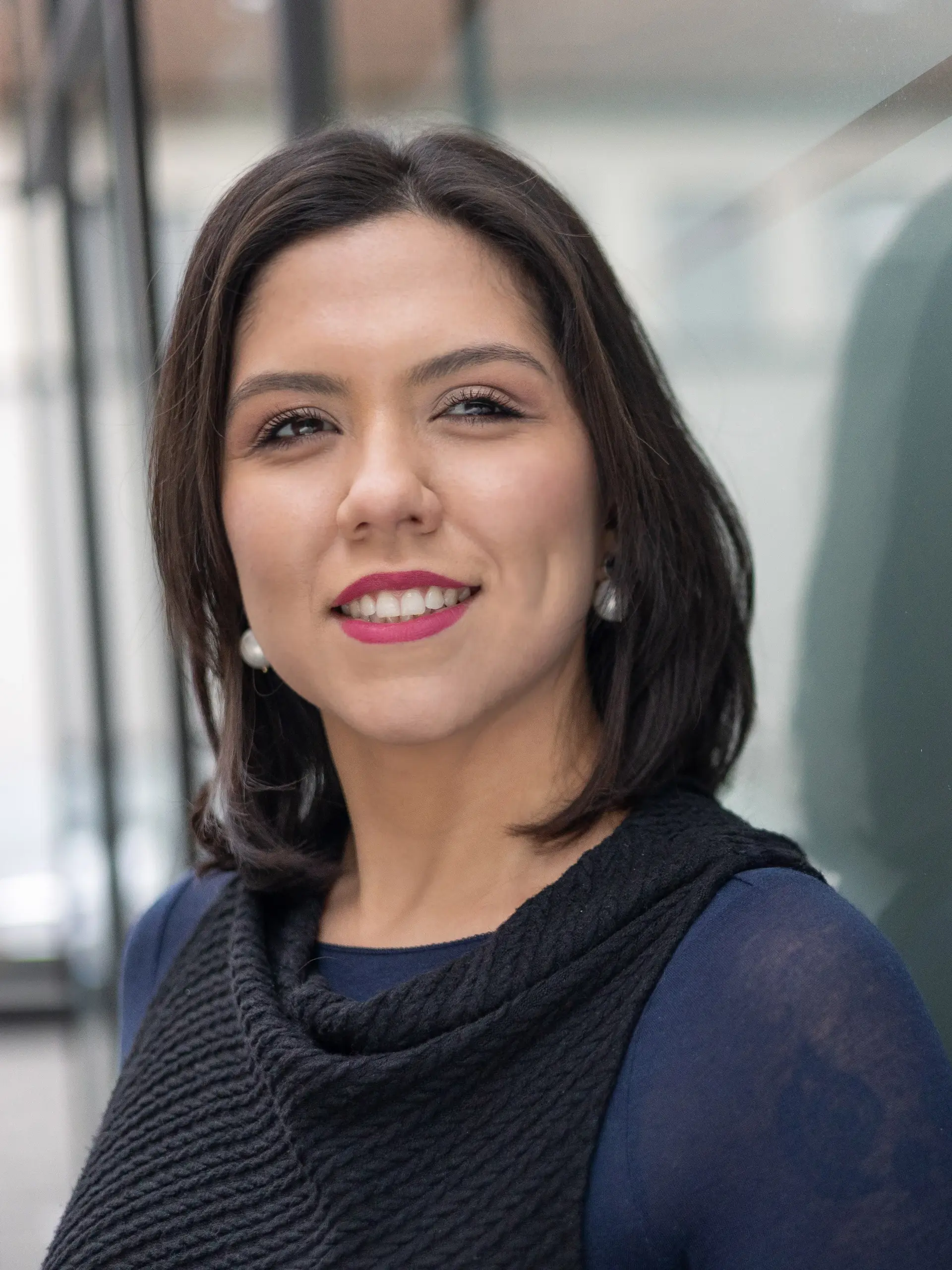
Dr. Mariah Freitas Monteiro
Is it already possible to predict what will happen next in Venezuela? What role does interim president Delcy Rodriguez play?
FREITAS MONTEIRO: Venezuela's future remains uncertain. It should be noted that the dismissal of Nicolás Maduro by no means marks the end of Chavism. The movement remains politically viable and is currently largely shaped by interim president Delcy Rodríguez, who has held key positions in the state apparatus since 2020, including the office of vice president, responsibility for the economy, finance and oil, as well as the management of the central bank. In the context of recent events, Rodríguez is pursuing an ambivalent line: On the one hand, she publicly condemns Maduro's violent arrest and the actions of the United States; on the other, she signals her willingness to negotiate with Washington. Donald Trump's support for her remaining in power is explicitly linked to her cooperation; in an interview with the magazine "The Atlantic", Trump threatened her that she would otherwise pay "a higher price than Maduro".
What is happening in the opposition right now? What does Nobel Peace Prize winner María Corina Machado do?
FREITAS MONTEIRO: María Corina Machado continues to be regarded as a leading figure in the opposition to Chavism in Venezuela. It remains to be seen whether she will succeed in forging concrete alliances with the Trump administration. She gave an interview to CBS via video conference because her current whereabouts are unknown, which serves to protect her from political persecution. In the interview, she emphasized that the Venezuelan people had already made a political decision. She herself had been elected in the primaries and after her political disqualification, Edmundo González Urrutia – a diplomat who was nominated as the consensus candidate of the opposition coalition – was the actual winner of the last elections. With this statement, she made it clear that her political camp and the united opposition are laying claim to governance. Confronted with Donald Trump's statements that she is a "nice woman" but does not have the respect among the Venezuelan population, Machado avoided a direct response and instead focused on praising the United States' military intervention. She portrayed the outcome of events as an expression of Trump's courage in bringing Maduro to some form of accountability, without pointing out that his arrest was on charges of drug trafficking and not electoral fraud. Machado is still trying to get closer to Donald Trump. In an interview with Fox News, she even went so far as to suggest that she share her Nobel Peace Prize with him. The two are due to meet in person in the coming days.
What does USA's action mean for the rest of Latin America? Trump has already openly threatened countries such as Colombia, Cuba and Mexico. What are the reactions on the continent?
FREITAS MONTEIRO: In Latin America, the actions of the USA in the case of Venezuela act as a clear warning signal of a renewed interventionist and conflictual tendency, the current manifestation of which points to deeply rooted historical patterns of experience in the region. In large parts of the region, the military intervention and the arrest of Nicolás Maduro were perceived as a violation of state sovereignty and international law. In a joint declaration, Brazil, Chile, Colombia and Uruguay condemned the action and reaffirmed the principles of the UN Charter; Spain also endorsed this position. The reactions on the continent are heterogeneous. While Colombia under Gustavo Petro is taking a particularly clear stance of rejection, Brazil under Lula da Silva and Mexico under Claudia Sheinbaum are emphasizing a pragmatic, diplomatic line. These positions stand in context of further measures taken by the Trump administration against the region, including economic pressure, punitive tariffs and political sanctions. Nevertheless, Trump also has support in Latin America: Individual governments openly welcomed the US action, including Javier Milei in Argentina, Daniel Noboa in Ecuador and Nayib Bukele in El Salvador. From a historical perspective, this is the first direct military intervention by the USA in Latin America since the invasion of Panama in 1989, when the dictator Manuel Noriega was overthrown in a violent operation. Previously, the region had been characterized by US interventionism for decades, initially through openly hegemonic strategies such as the Big Stick policy and the Monroe Doctrine of 1823, and later through support for authoritarian regimes during the Cold War. The current approach is accompanied by the historical shadow of this long history of intervention. In this context, Trump's open threats to other countries in the region are reinforcing a climate of pessimism and uncertainty and confronting Latin America with the difficult task of asserting its sovereignty while at the same time reacting with particular caution to a US administration that is unlikely to show comparable restraint.



![[Translate to English:] Fahnen von den USA und Venezuela](/fileadmin/_processed_/6/0/csm_AdobeStock_1863776719_2b67d9eacb.webp)