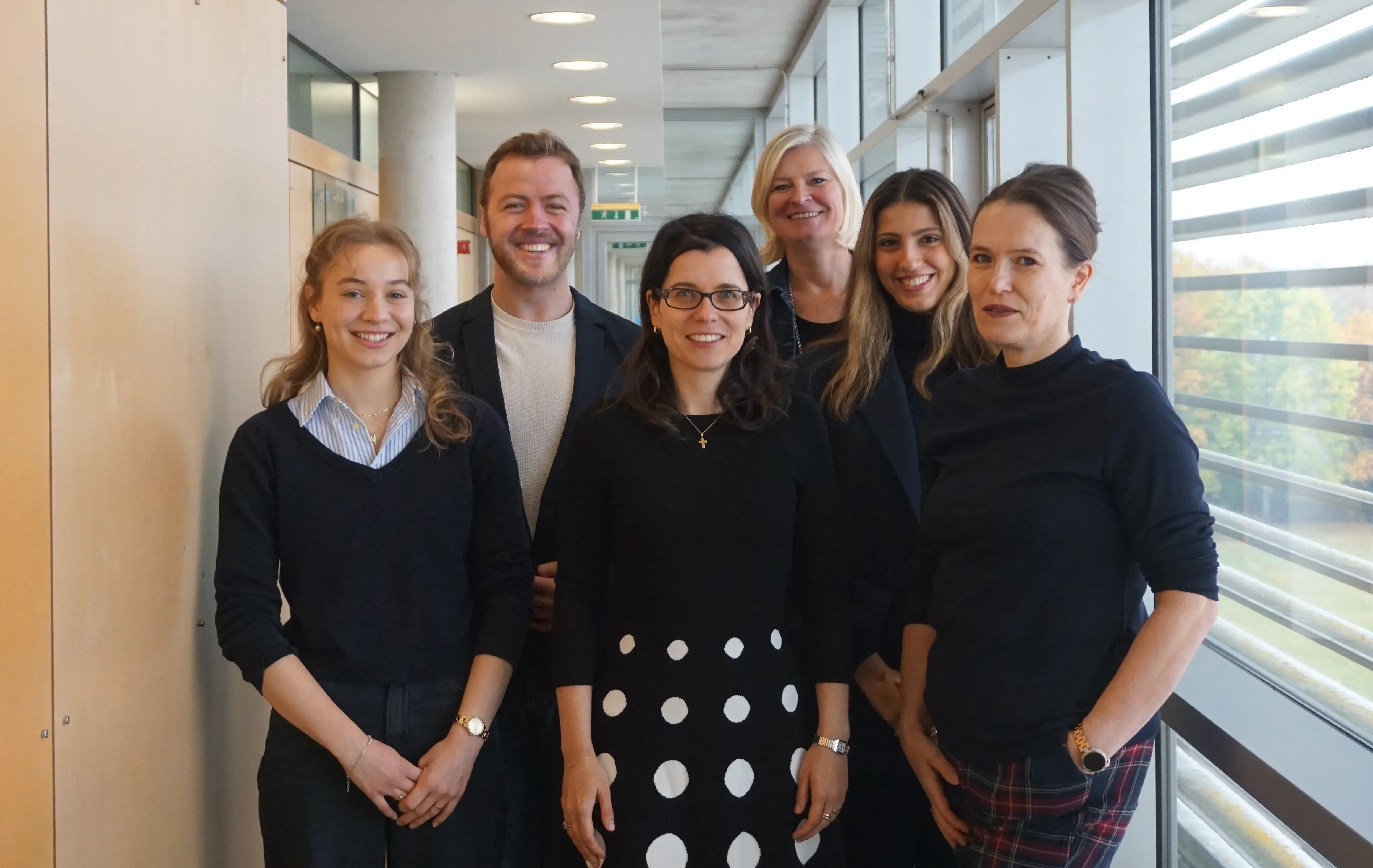
Welcome to the Chair of Business Administration and Psychology
Prof. Dr. Victoria-Sophie Osburg has been professor of Business Administration and Psychology at WFI since April 1, 2025, focusing on research and teaching at the intersection of business and psychology. The chair offers Master’s courses such as The Psychology of Sustainable Luxury Consumption, Psychological Approaches to Behavior Change for Social Good, and Food Technology Acceptance: A Psychological Perspective. The aim of these courses is to provide students with an in-depth understanding of the psychological aspects of consumer behavior and sustainable development.
The chair's research emphasizes the impact of Corporate Social Responsibility (CSR) activities and responsible consumption, particularly in the digital realm. A central area of research is investigating how companies can utilize technology to promote sustainable consumption and establish themselves as socially responsible actors in a competitive marketplace. Additional topics of study include sustainability in luxury consumption, the perception of ethical standards, and strategies for reducing irresponsible consumption, particularly within the healthcare sector.
Further information about current research projects and courses can be found on the following pages. The chair’s team is available to answer any questions you may have.
Our Secretariat Team
Catholic University of Eichstätt-Ingolstadt
Chair of Business Administration and Psychology
Secretariat, Room NB-309
Auf der Schanz 49
85049 Ingolstadt
Germany
Email: sekretariat-osburg(at)ku.de
Phone: +49 841 937-21893