“Second best is good enough” – WFI celebrates Dies Oeconomicus
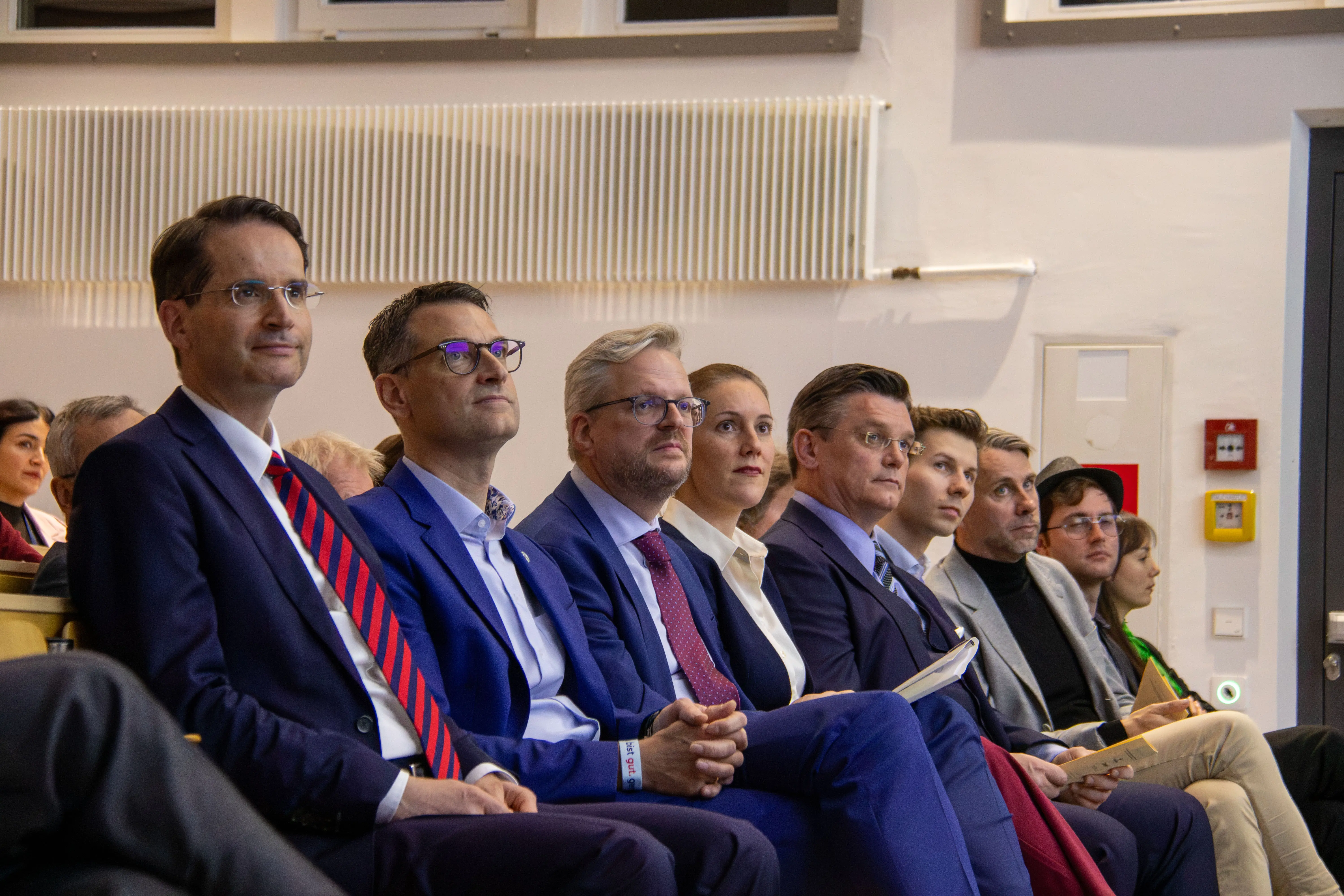
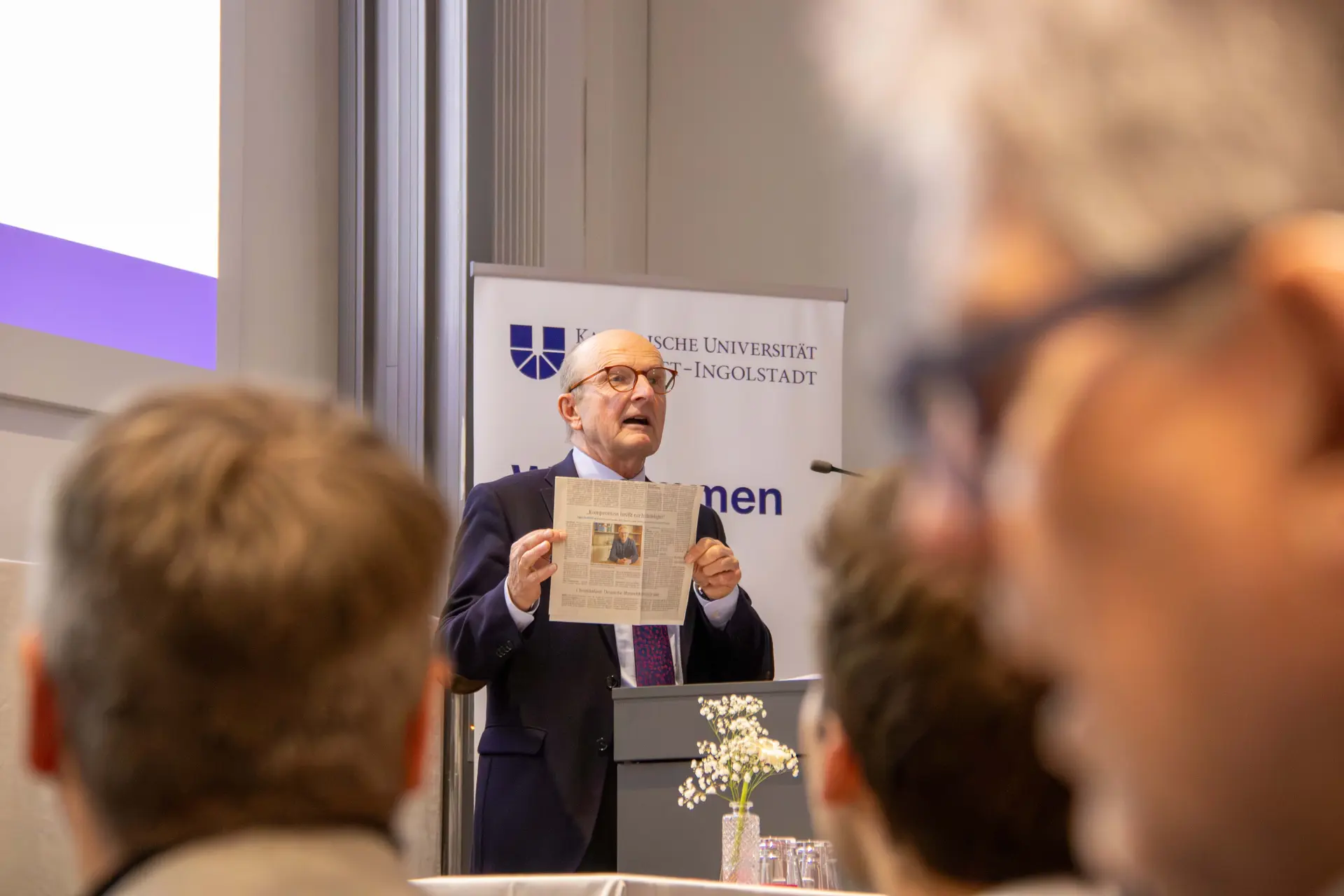
But before Goldschmidt provided substantive insights, representatives from the WFI Friends Association, the faculty, the University Management, and the city of Ingolstadt welcomed the numerous guests. Prof. Dr. Peter F. Tropschuh, chairperson of the WFI Friends Association, drew on the title of Goldschmidt’s lecture to contextualize the WFI’s developments over the past two years. Speaking on behalf of the WFI, he emphasized that the institution seeks not merely the second-best solution, but always the very best; that it is committed to first-class teaching practice; that it positions itself as a center of excellence; and that it leads the way within the KU in areas such as the proportion of international students. Backed by these arguments, he expressed his annual wish: “I would like to see the word ‘university town’ on Ingolstadt’s city sign someday”, he said. With that, he concluded his “completely incomplete, completely subjective review”, as Tropschuh put it.
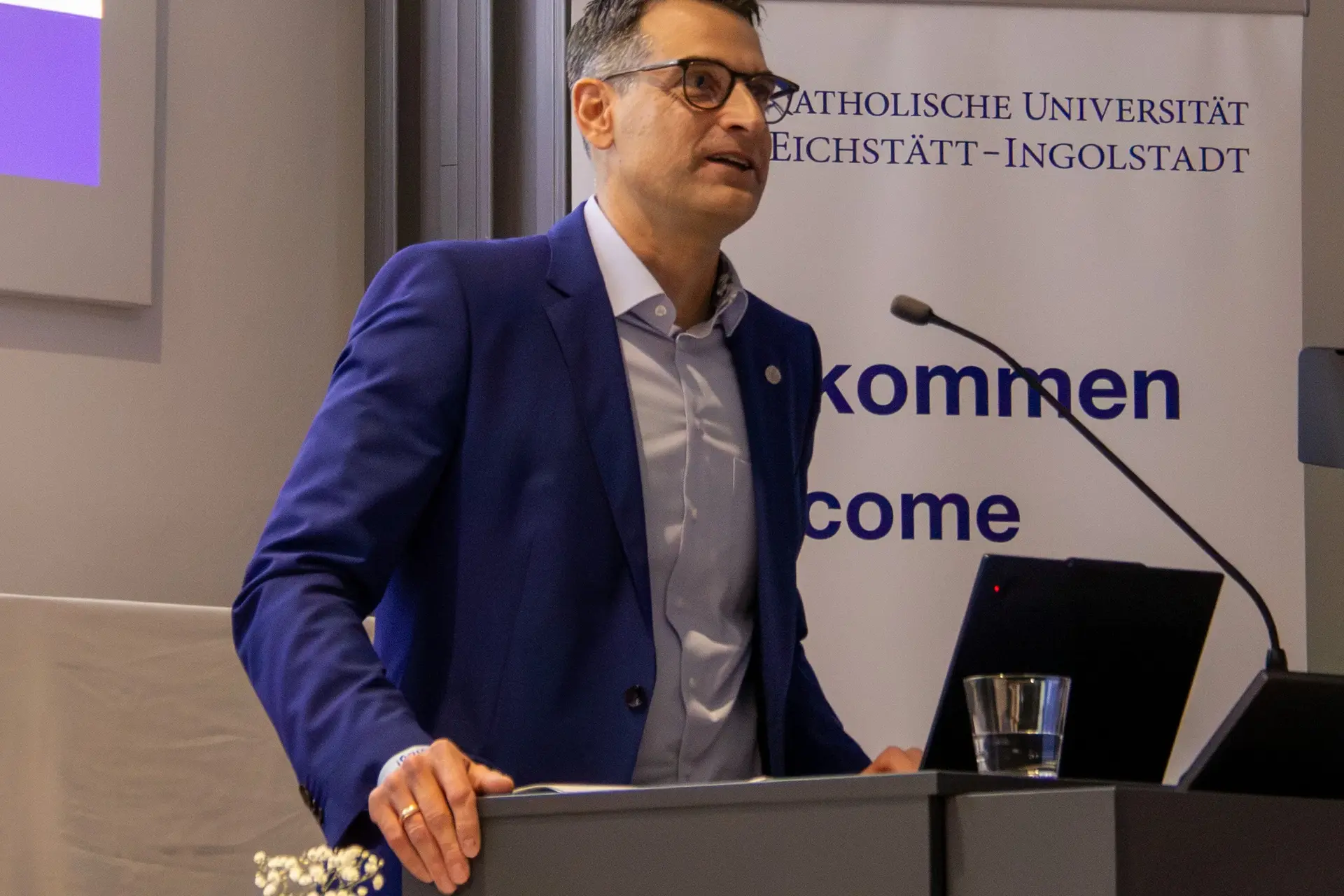
Speaking on behalf of the KU Presidium, Prof. Dr. Jens Hogreve, Vice President for Research and Early-Career Researchers, highlighted an “important milestone” in the WFI’s development over the past two years: Accreditation by the Association to Advance Collegiate Schools of Business (AACSB) is a testament to the highest quality, an achievement attained by only six percent of business schools worldwide. It is regarded worldwide as a seal of quality for excellence in teaching practice, research, and practical orientation. The accreditation has also set in motion a process of creativity and renewal that demonstrates that the WFI does not settle for second best. “The art lies in distinguishing where compromises are necessary and where one should strive for the good”, Hogreve said, echoing the evening’s theme.
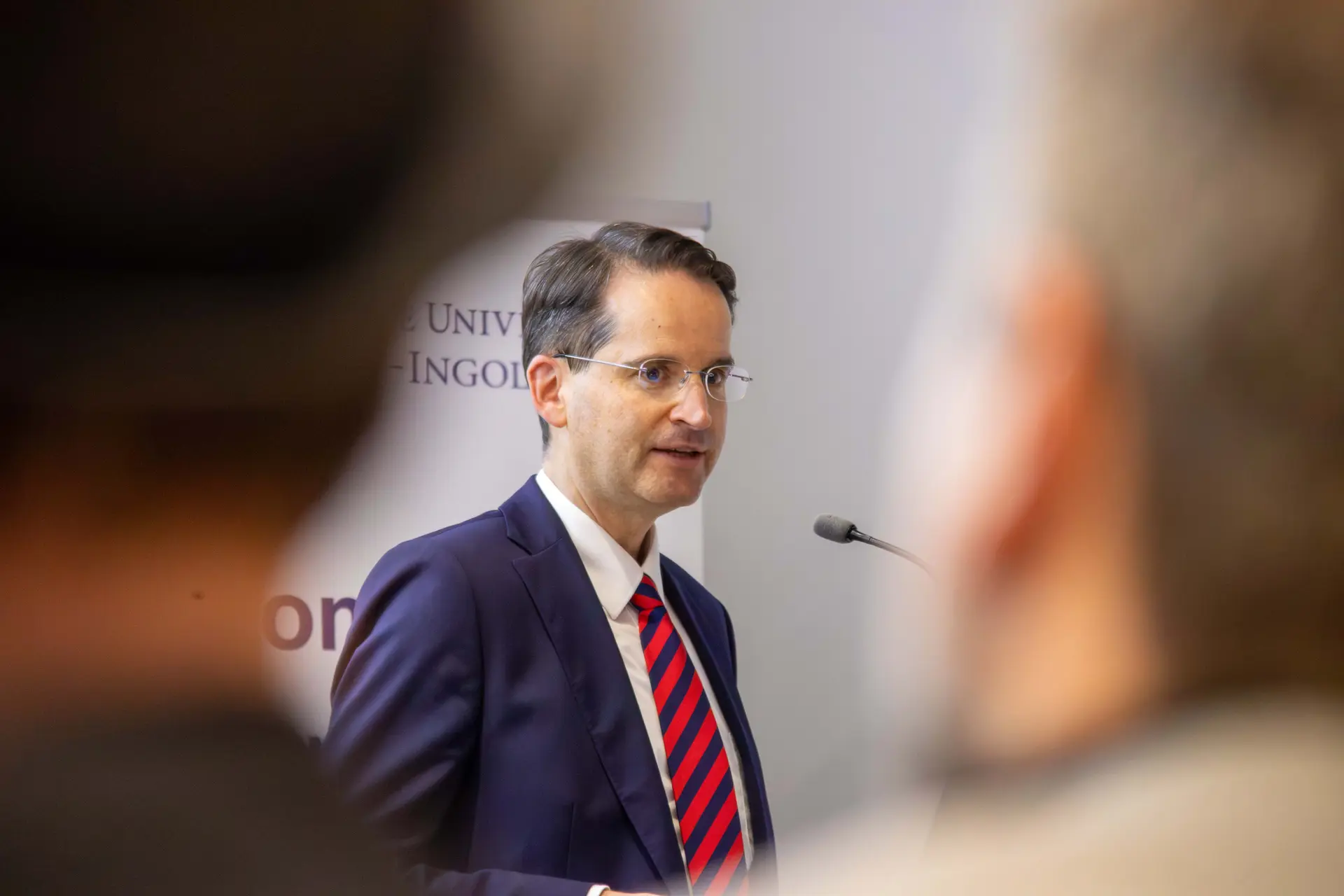
Ingolstadt’s mayor, Dr. Michael Kern, offered his perspective on the topic of compromise: In times when a lack of growth poses major challenges for the city, he said, compromise is essential to finding feasible solutions. He praised the program at WFI: “This is about more than just financial management. Students are equipped with values and foresight to shape the future with a social perspective and an ethical lens.”
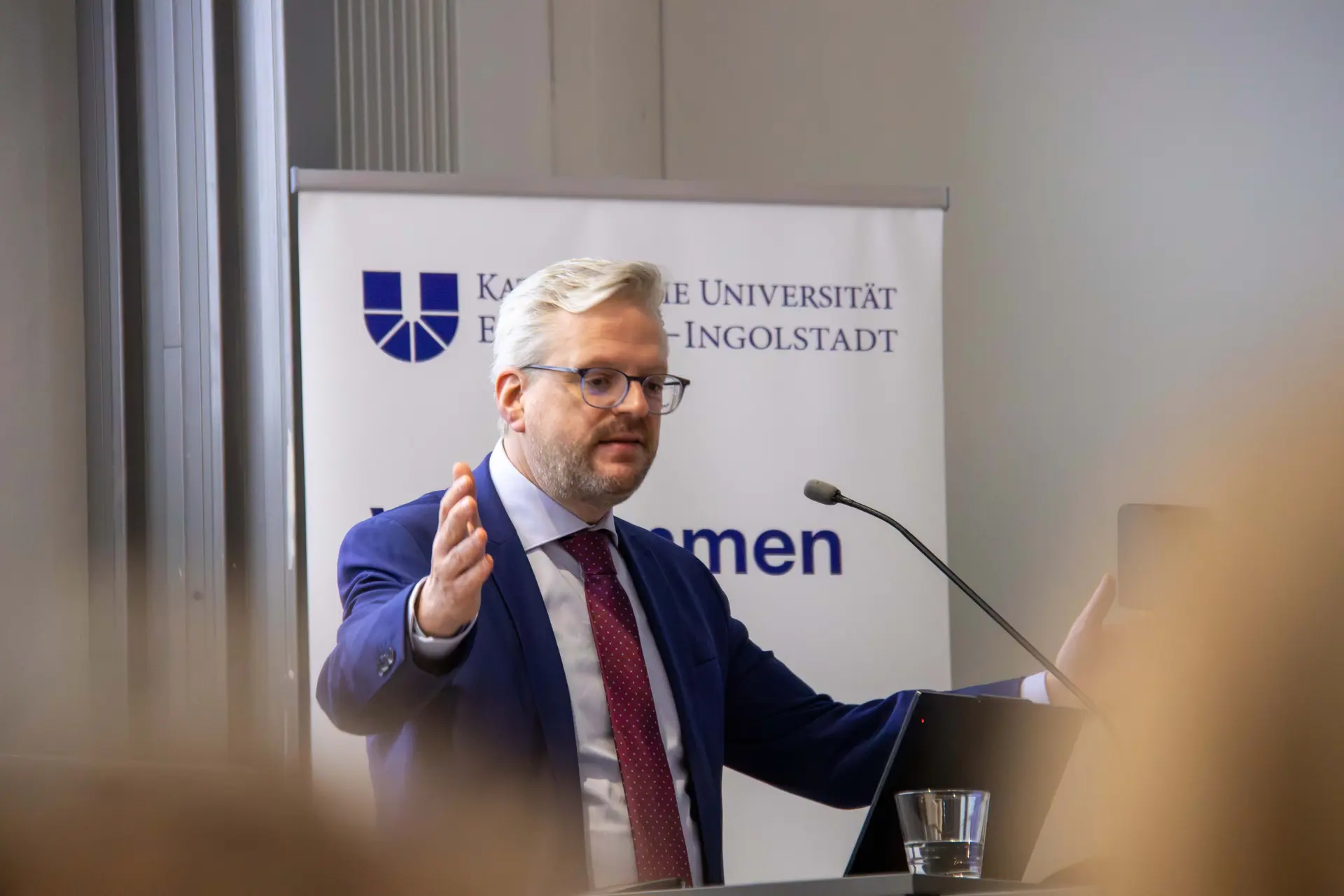
Finally, the dean of the WFI, Prof. Dr. Thomas Mählmann, introduced Prof. Goldschmidt as an ideal source of inspiration. “In a nutshell: it’s about human-centered economics” he quoted Goldschmidt as saying at the outset. The economist and theologian makes it clear that having people in mind must precede having markets in mind.
“Second best doesn’t have a good reputation”
Had Goldschmidt—director of the Global Ethic Institute and professor of contextual economics and economic education at the University of Siegen—aptly welcomed the audience with “I warmly welcome the second-best guests to the second-best celebration”, the mood would likely have been rather subdued. Right at the start of his keynote address, Goldschmidt made it clear: “Second best doesn’t have a good reputation.” But it quickly became apparent that the search for the second-best solution does not necessarily mean that the best solution was missed. Rather, the goal is to solve optimization problems under difficult conditions. Various societal interests must be balanced to enable viable decisions. While the search for consensus assumes that a single true solution is possible, compromise is based on the fact that even after all arguments have been exchanged, there need not be unanimity. “In a compromise, the parties therefore agree on joint action, but not on shared reasons. This also means letting go of part of one’s own ideal solution”, said Goldschmidt. His core message was: “Joint action is what defines humanity.” The ability to evaluate this joint action, to take a step back, to revise wrong decisions, and consequently to make good decisions is also what defines human action. Despite the focus on the second-best solution—and the accompanying rejection of consensus—Goldschmidt’s message was first and foremost a positive appeal to the spirit of compromise, which also demonstrated that, despite the prevailing “doomsday rhetoric”, Germany is better off than many people think.
What does “second best” mean in the context of inheritance tax?
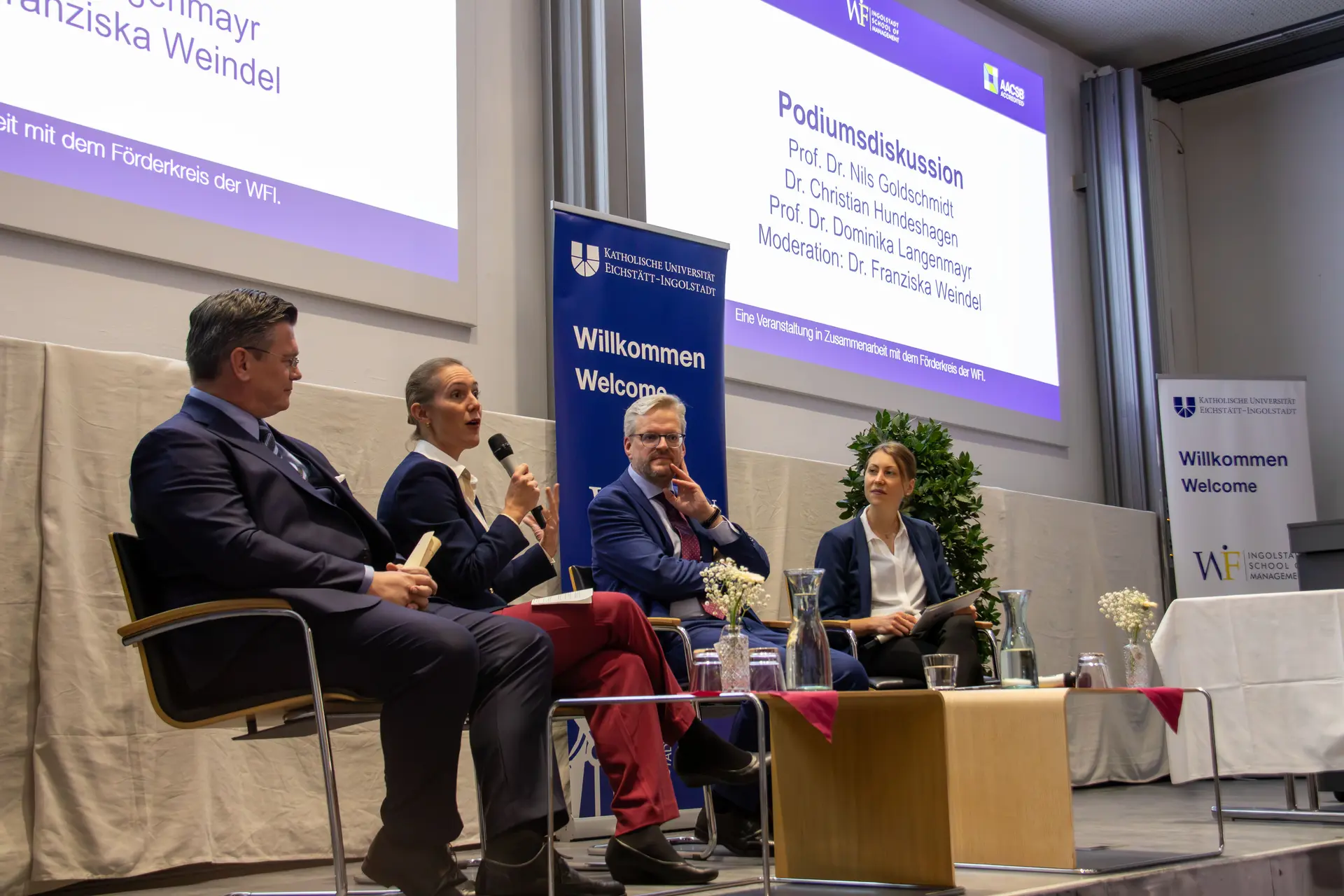
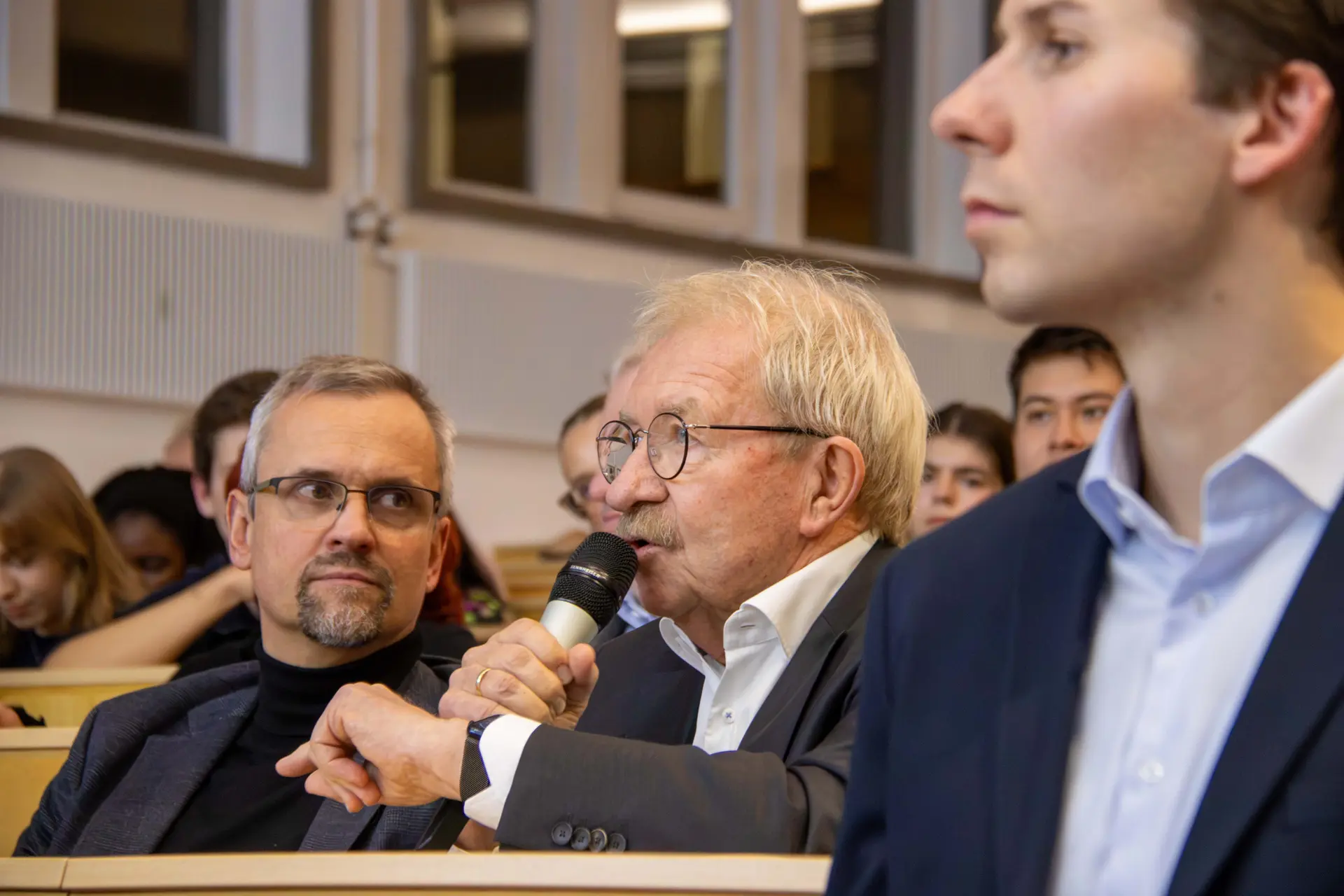
During the subsequent panel discussion, it became clear that Goldschmidt’s thesis regarding the inheritance tax cannot be viewed solely from an economic perspective. “Taxes can trigger emotions”, explained Prof. Dr. Dominika Langenmayr, Professor of economics—in particular public finance—at the KU and a member of the academic advisory board at the Federal Ministry of Finance. Exemptions for companies would need to be explained thoroughly. Langenmayr accordingly advocated for lower tax rates, which, however, should be implemented with significantly fewer exemptions. Dr. Christian Hundeshagen, a partner at Linklaters LLP in Frankfurt am Main, disagreed and countered by emphasizing the need to protect the capital base of family-owned businesses in particular, which are hit hard by the inheritance tax. He was supported by an objection from the audience. Reinhard Büchl, senior partner at Büchl Entsorgungswirtschaft, used his company as an example to illustrate what inheritance tax means for a family business compared to a corporation. It was precisely these seemingly irreconcilable viewpoints that ultimately proved Goldschmidt right: “Of course, we won’t reach a consensus here,” he said, thereby emphasizing the need for a good compromise.
Outstanding doctoral thesis
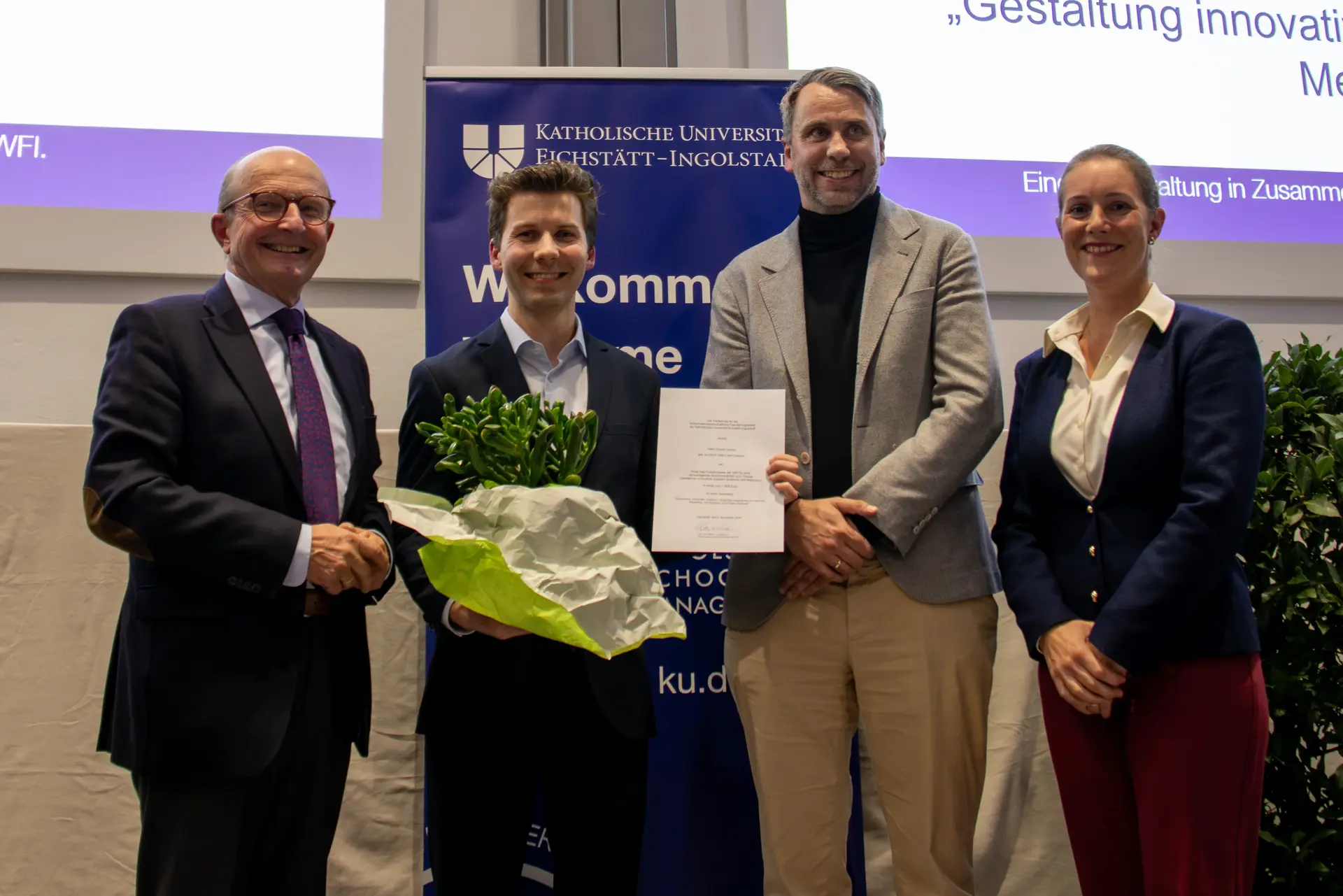
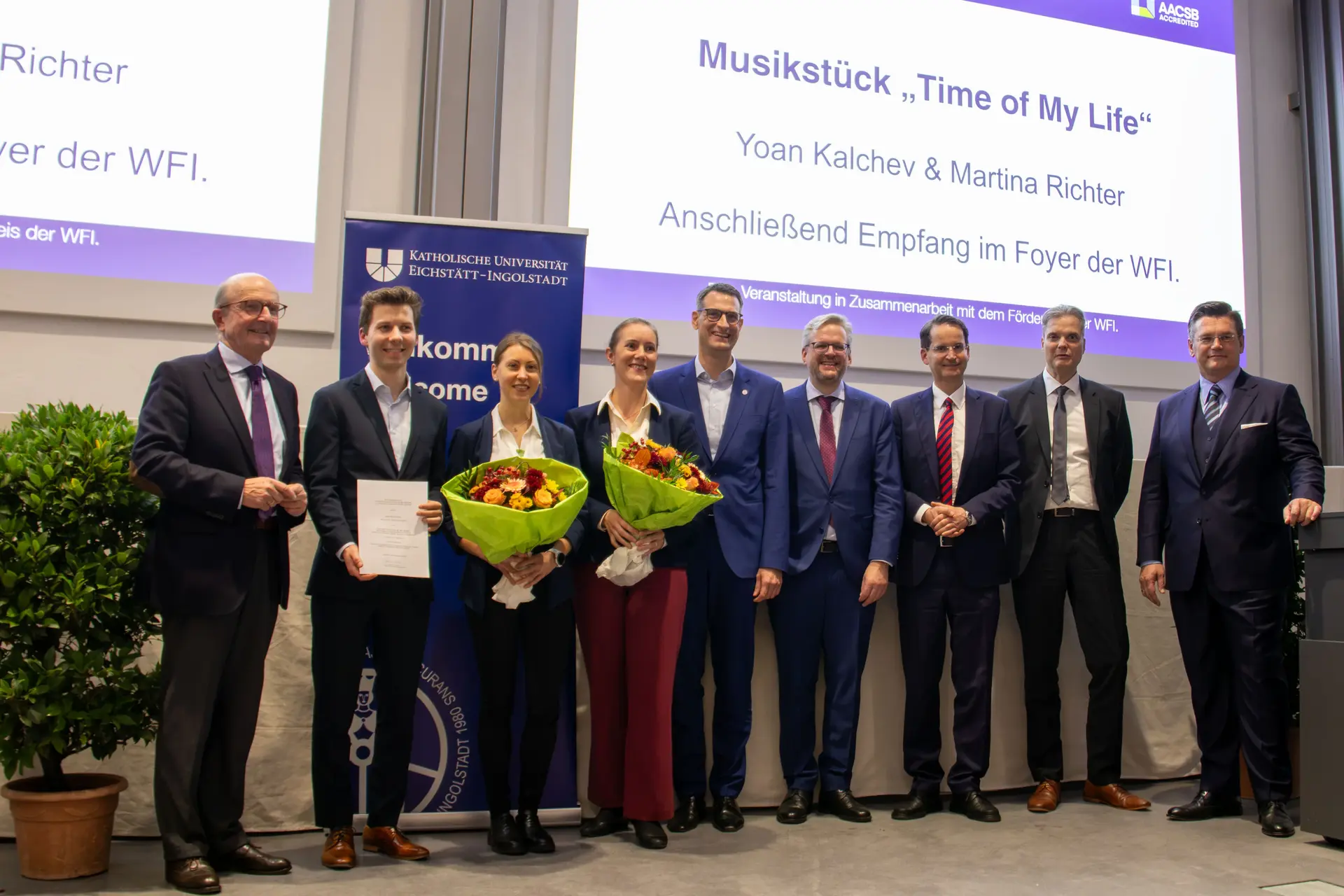
At the conclusion of the official program, the WFI Friends Association Award for “Designing Innovative Digital Systems and Methods” was presented to Dr. Simon Helms. He was honored for his doctoral thesis titled “Asymmetric Corporate Taxation – Empirical Implications for Financial Reporting, Tax Burdens, and Public Finances.” In this work, he examined asymmetric corporate taxation—that is, the different tax treatment of profits and losses. The jury, chaired by Dean of Studies Langenmayr, considered particularly deserving of the award the development of a novel, universally applicable microsimulation model for the taxation of corporations, which algorithmically models complex tax regulations and quantifies their economic impacts.
Text and photos: Melena Renner, translation: Sylvia Schmager