Kulturell-materielle Geographien der Qualifizierung und Wertkonstitut

Wie werden Werte durch menschliche und nichtmenschliche Akteure in einem Zusammenspiel kultureller Praktiken und materieller Repräsentationen ko-produziert? Wir analysieren, wie „Qualität“ und „Wert“ keine einfachen Eigenschaften von Dingen sind, sondern relational in komplexen Netzwerken aus Menschen, Nichtmenschen, Dingen, Praktiken, Institutionen und Diskursen gemeinsam hervorgebracht werden, die stets in ihren historischen Kontexten zu verorten sind. In ethnographischen Feldstudien nutzen wir unter anderem Beispiele aus der Land- und Forstwirtschaft, um kultur-materielle Einflüsse systematisch zu untersuchen. Dabei stellen wir uns etwa folgende Fragen: Was zeichnet Weine aus, die mit Mikroben ko-produziert werden? Welche ethischen Grundhaltungen prägen die Praktiken von sogenannten Naturwein-Winzer:innen? Wie entstehen resonante Erfahrungen in den Wäldern und Forstplantagen des Nordschwarzwalds? Qualitative Forschungsmethoden und unterschiedliche theoretische Ansätze ermöglichen es uns, die komplexen Verflechtungen menschlicher und nicht-menschlicher Akteure differenziert zu analysieren und so zur Reflexion und Verständigung über gesellschaftliche Naturverhältnisse beizutragen.

Ausgewählte Forschungsprojekte:

Geographien der Qualifizierung im globalisierten Weinmarkt
2021-2025 | Christian Steiner, Gerhard Rainer | DFG

Die Globalisierung der Weinproduktion und ihre Auswirkungen auf die globale Vernetzung ländlicher Regionen
02/2019-04/2019 | Christian Steiner, Gerhard Rainer | Intern/PROFOR

Mobility and lifestyle, capital and land: Regional transformations in a globalizing wine in-dustry
2016-abgeschlossen | Gerhard Rainer

weiterführende Informationen

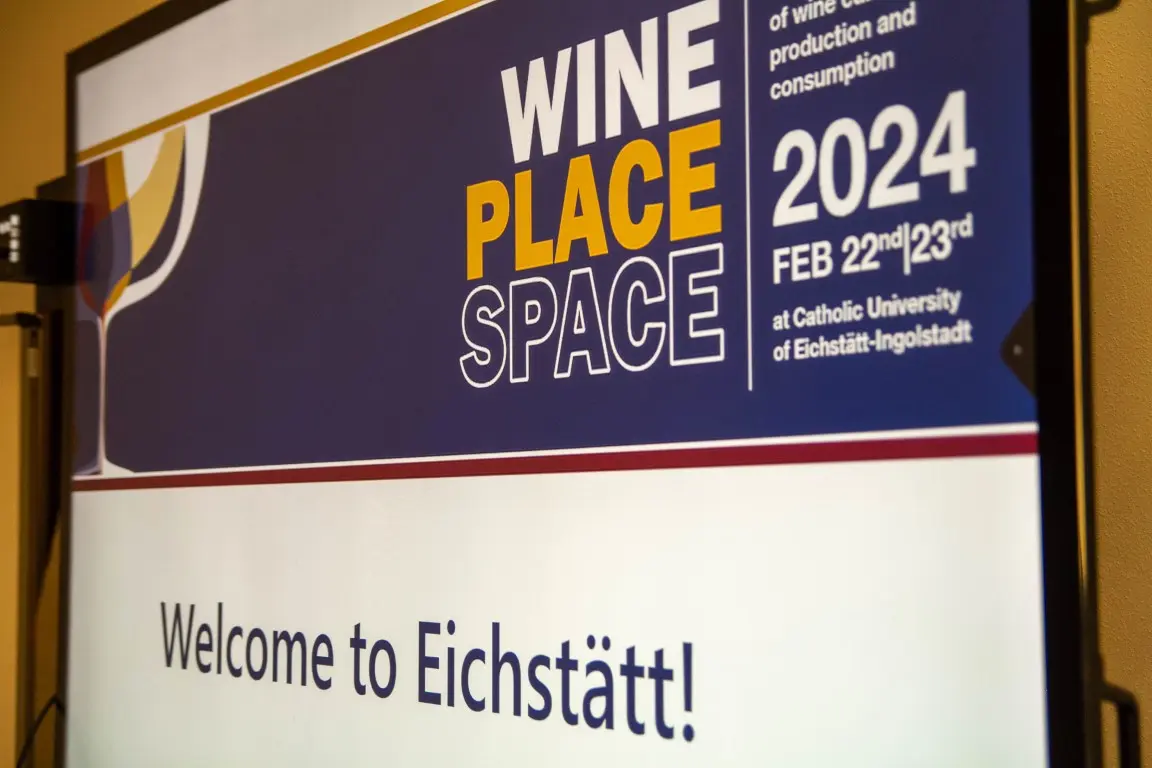
Successful conclusion of the conference „Wine, place and space - Global geographies of wine cultivation, production and consumption“

Wine cultivation, production, and consumption is a social phenomenon that intersects various scientific disciplines. Besides the natural sciences and technological dimension of cultivation and production, wine is an economic common and as such part of the global economy. As a consumer product, wine is entangled with (regional) identities and imaginaries and is mobilized as a token of distinction and social class.

Various trends have shaped and are about to influence the production and consumption of wine considerably: shifts of wine cultivation areas due to climatic changes (e.g., Nordic countries), re-organization of wine production in global production networks, negotiation of work conditions in wine cultivation and production, digitalization of cultivation and production practices, and changing consumer dynamics.

This workshop aimed to discuss these developments based on current theoretical approaches in human geography, sociology, philosophy, history, anthropology, cultural studies, and others and is particularly interested in the spatial configurations of these dynamics, for example with regard to scales, networks, territories or places.

After a successful get-together on the evening before the event with a tasting of various wines and plenty of background information from the Franconian wine-growing region, the first day of the conference began with presentations and discourses on new practices in natural viticulture, new spaces and places, as well as territorial changes and the evaluation and qualification in the wine industry.

Day 2 also offered discursive insights on topics such as the transformation of wine networks, sustainable viticulture and wine and its changing traditions. Numerous topics that call for a continuation.


Podcast

The emergence of new wine design practices Flexitanks and the assembling of bulk wine

Podcast

Bitte beachten Sie: Sobald Sie sich die Mediendatei anhören, werden Informationen darüber an SoundCloud übermittelt. Weitere Informationen dazu finden Sie unter SoundCloud-Datenschutzrichtlinie .