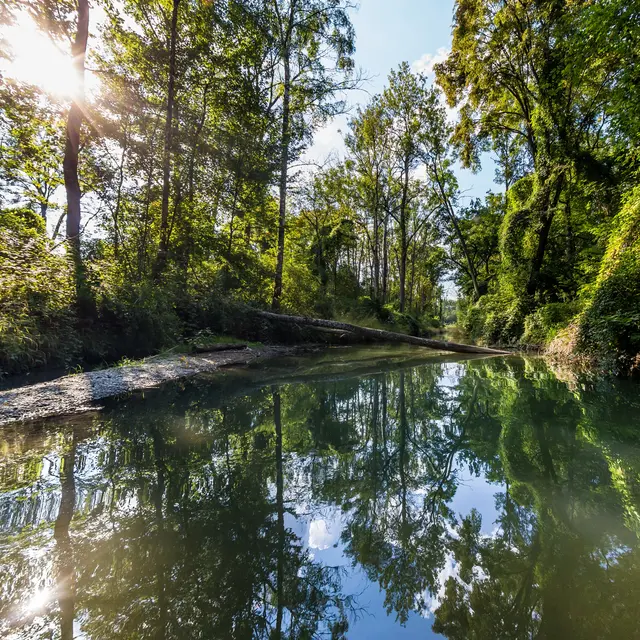
The riparian forest between Neuburg and Ingolstadt, covering an area of approximately 2,000 hectares, is one of the most significant floodplain forests along the Danube. One of Central Europe’s largest floodplain revitalization projects began here just over 20 years ago. In this context, "dynamization” – that is, revitalization – refers to targeted flooding and lowering of the groundwater level. The landscape along a river whose course has been restricted by regulatory measures shall be restored to a near-natural state. At several points along the Danube, connections were created to the adjacent forest area in order to divert the river water through it. In this way, the Ottheinrichsbach – a bypass channel about eight kilometers long – was restored, and the riparian forest could be flooded several times a year through controlled flooding. “The term ‘flood’ usually has negative connotations”, says geographer Prof. Dr. Bernd Cyffka. Floodplains, on the other hand, are dependent on regular flooding – especially for keeping the flora and fauna typical of floodplain forests alive.
Floodplain Institute's 20-year anniversary: Research from the region with international impact
![[Translate to English:] Aueninstitut](/fileadmin/_processed_/f/4/csm_20_Jahre_Aueninstitut_2026_Christian_Klenk_74fec08963.webp)
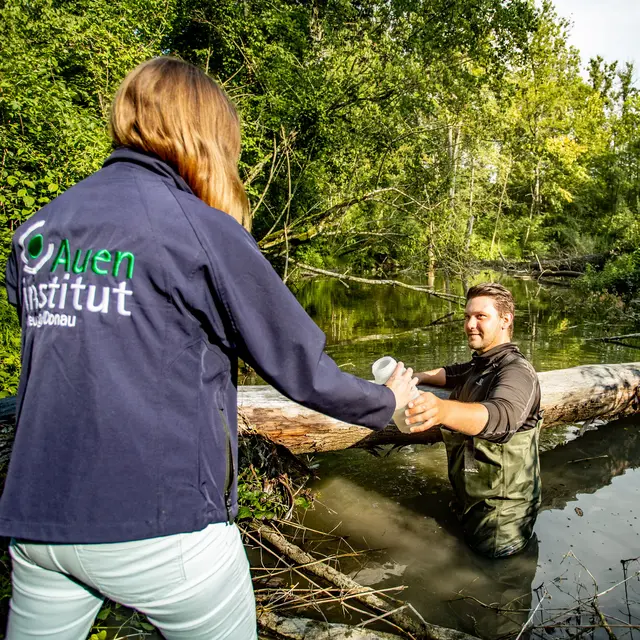
In 2009, researchers at the Floodplain Institute began studying the effects of the restoration measures. Not only were the hydrological and hydromorphological processes – that is, the structure and flow of the water body – documented in detail, but the researchers also investigated changes in the flora and fauna: Have species typically found in floodplain forests reclaimed their habitat? Just a few years after the restoration, scientists had already identified 45 species that had not been seen in the area for some time – including six plants listed as critically endangered. Even 40 years after the construction of the dams, the seeds in the soil were still viable.
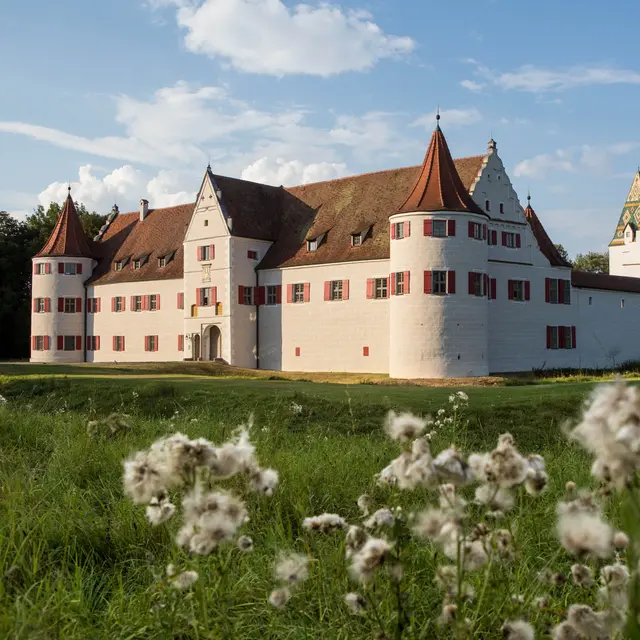
Prof. Cyffka presented these and other findings from two decades of floodplain research during the ceremony marking the 20th anniversary of the Floodplain Institute at Schloss Grünau, which houses not only the institute but also an information center for the public. Preserving and restoring floodplains not only promotes biodiversity but also plays a key role in flood control and groundwater protection. “As natural water reservoirs, flood shelters, and at the same time sensitive indicators of ecological changes, intact floodplain areas are about much more than just nature conservation”, said KU Vice President Prof. Dr. Klaus Stüwe. “Riparian forests serve as active climate protection, risk prevention, and sustainable land-use planning all in one.”
The work of the Floodplain Institute ensures that research on river dynamics, floodplain ecology, and restoration does not remain confined to the laboratory, but is applied to real landscapes and translated into specific conservation measures. “That is precisely where the Floodplain Institute’s particular strength has shown for the past two decades”, said Stüwe. Scientifically substantiated findings were incorporated into tangible measures: “Monitoring restoration projects, developing new methods, and critically analyzing successes and limitations help ensure that we, as a society, can learn from these experiences and continuously improve our approaches to building a sustainable future.” In this way, the Floodplain Institute “exemplifies what the KU is all about: the combination of scientific excellence, social responsibility, and tangible local impact.”
The Floodplain Institute is a collaborative project between the KU and local partners: In addition to the district of Neuburg-Schrobenhausen, on whose initiative the institute was established, the cities of Ingolstadt and Neuburg, private individuals, nature conservation organizations, and a support association are all involved in supporting the Floodplain Institute. According to Vice President Stüwe, this close collaboration between academia and local government is a key factor in success and, at the same time, a strong indication of what successful partnerships can achieve. “It’s impossible to imagine our region without the Danube floodplains”, said Peter von der Grün, the district administrator of Neuburg-Schrobenhausen, at the ceremony. That is why the district is also providing financial support for the project partly to help the general public appreciate the importance of the floodplains more. Thanks to its research, the Institute has long had an impact far beyond the region and is now a coveted expert organization in the field of floodplain ecology. In his welcoming remarks, Mayor Dr. Bernhard Gmehling emphasized that the establishment of the Floodplain Institute had laid the foundation for “Neuburg as a center of science” as early as 20 years ago.
Building on the restoration project in the riparian forest near Neuburg, the institute is now conducting research in other geographical areas as well – all over the world: As part of several EU projects, findings learned from the initiatives in Neuburg were applied to other project areas, such as the entire Danube region. In doing so, KU researchers collaborated with universities, government agencies, companies, and NGOs in other EU countries. Often, the goal is also to inform and raise awareness among the public or to train local staff. Research has also been conducted on aquatic ecology in Central Asia: Thus, the preservation of the ecosystem in the floodplains of the Naryn River in Kyrgyzstan, in conjunction with the use of renewable energy, was the focus of an international collaborative project. Currently, the EU project "SWIM” focuses on migratory fish species and their living conditions. The Vice President highlighted the Institute’s impressive record of securing third-party funding: Thanks to its successful participation in European and national funding programs, the Floodplain Institute has consistently been able to carry out new, innovative projects and further develop research approaches at the highest level.
Vice President Stüwe emphasized that the Institute’s success can largely be attributed to its founder, Prof. Cyffka. “Your commitment to floodplain research – and especially to the region and to bridging the gap between science and society – is exemplary.” After conducting research at the Department of Geography at the University of Göttingen, Cyffka took over the Professorship in Applied Physical Geography at the KU in 2005. A year later, he became director of the newly founded Floodplain Institute. Over the years, he has also taken on numerous roles and responsibilities in his field, including serving as spokesperson for the “Hydrology” working group of the German Geographical Society, as editor of several scholarly publications, and, since 2022, as president of the International Association for Danube Research.
The Floodplain Institute's anniversary also marked his goodbye from the institute and from the KU: Bernd Cyffka retired on March 31. The Dean of the Faculty of Mathematics and Geography, Prof. Dr. Susanne Jochner-Oette, praised his many years of service: Cyffka has played a key role in shaping the Institute and floodplain research over many years. In doing so, he transformed the Floodplain Institute into a recognized research institution characterized by high scientific quality, strong regional ties, and international influence. “The Floodplain Institute demonstrates how research can lead to tangible solutions to pressing problems that also serve as a source of inspiration internationally.”