Research focus III: Religiosity in transformation processes of the present
Research focus III "Religiosity in transformation processes of the present" is concerned on the one hand with investigating the profound changes in the area of religiosity, church social forms and the understanding of faith. On the other hand, the manifold crises and transformations of the present are giving rise to challenges that fundamentally affect and question religion, spirituality, cultural interpretations of the world and the meaning of life. Linked to this is the search for epistemic approaches, attitudes, resources of meaning and forms of communication that allow dealing with such challenges and conflicts in a critical and constructive manner. The aim is to contribute to the debates on the self-image of a modernity that has become reflexive and to critically reflect on the role of Western culture and its values in the globalized world.
The current transformation of religious concepts, attitudes and practices is profound, tense and ambivalent. An individual and pluralistic approach to religion in search of identity and authenticity dominates. On the one hand, the decision for or against a specific religious affiliation plays an important role and, on the other hand, an institutionally unbound religiosity is gaining ground against institutions with a fixed ritual and dogmatic order. In the global market of heterogeneous religious offerings, people can choose and combine what suits them while rejecting other things. Social media offer new ways of organizing religion, but also entail the danger of manipulation. Charismatic movements and (evangelical) free churches are gaining popularity worldwide. The fact that religious symbols and language are being received and adapted in literature, film, pop culture and advertising is also characteristic of the changing approach to religion. Researchers also detect a growing significance of movements that seek to establish a fixed identity that excludes the other(s) through selective recourse to individual traditions. This in turn can reinforce skepticism towards religious claims to validity, which comes to a head in scientistic positions. This is where the question of functional equivalents of religion in post-secular societies sometimes arises, combined with the dangers of idolatrous exaggeration of persons, objects or political goals. Scientifically understanding and interpreting these transformations of religiosity in the present requires an interdisciplinary approach.
Despite the trend towards an individualized approach to religion, religiosity is about more than just personal taste. The search for truth, for the good and the just, for the beautiful and the ultimately sustainable are intertwined. Religion and theology are confronted with the great challenges that affect humanity as a whole. Global injustice, transnational conflicts and the ecological crisis are calling the cohesion and survival of global society into question. When traditional moral and political orders become fragile, theology, with its focus on God and the redemption of the world, can contribute to critically questioning present conditions and their constraints and thinking beyond them. In conversation with philosophy, social, political and cultural sciences, the conditions and motivations that make this possible, the conception and scope of attitudes that enable social cohesion, the constructive resolution of conflicts, the overcoming of group and enemy mentality and a new relationship between humans and nature are discussed. In particular, it is important to critically reflect on the differences in power, the varying degrees of concern and vulnerability that emerge in the crises on a social, economic, cultural and ecological level.
In addition to these basic reflections, we will also explore the role of lived religiosity as an influential factor in social upheavals that should not be overlooked. In contexts where existing orders are fragile, traditional classifications of church and state are insufficient to capture this influence adequately. It is important to examine how religious communities and churches, alongside other private, state, and societal actors, help shape the culture and pre-political conditions of a political community. Conversely, we must ask to what extent different reactions to current political and ecological crises are linked to cultural and religious conflicts that take place not only between religions and worldviews but also between different styles of faith, ways of life, and ways of thinking.
Spokespersons
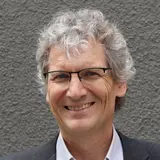
Prof. Dr.
Martin
Kirschner
Direktor ZRKG/Sprecher FF III
Building
Am Salzstadel 1
Postal Address
Katholische Universität Eichstätt-Ingolstadt
ZRKG
Am Salzstadel 1
85072 Eichstätt
Katholische Universität Eichstätt-Ingolstadt
ZRKG
Am Salzstadel 1
85072 Eichstätt

Prof. Dr.
Isabelle
Stauffer
stv. Direktorin ZRKG/Sprecherin FF III
Building
Universitätsallee/Zentralbibliothek
|
Room: UA-226
Postal Address
Katholische Universität Eichstätt-Ingolstadt
Universitätsallee 1
85072 Eichstätt
Katholische Universität Eichstätt-Ingolstadt
Universitätsallee 1
85072 Eichstätt