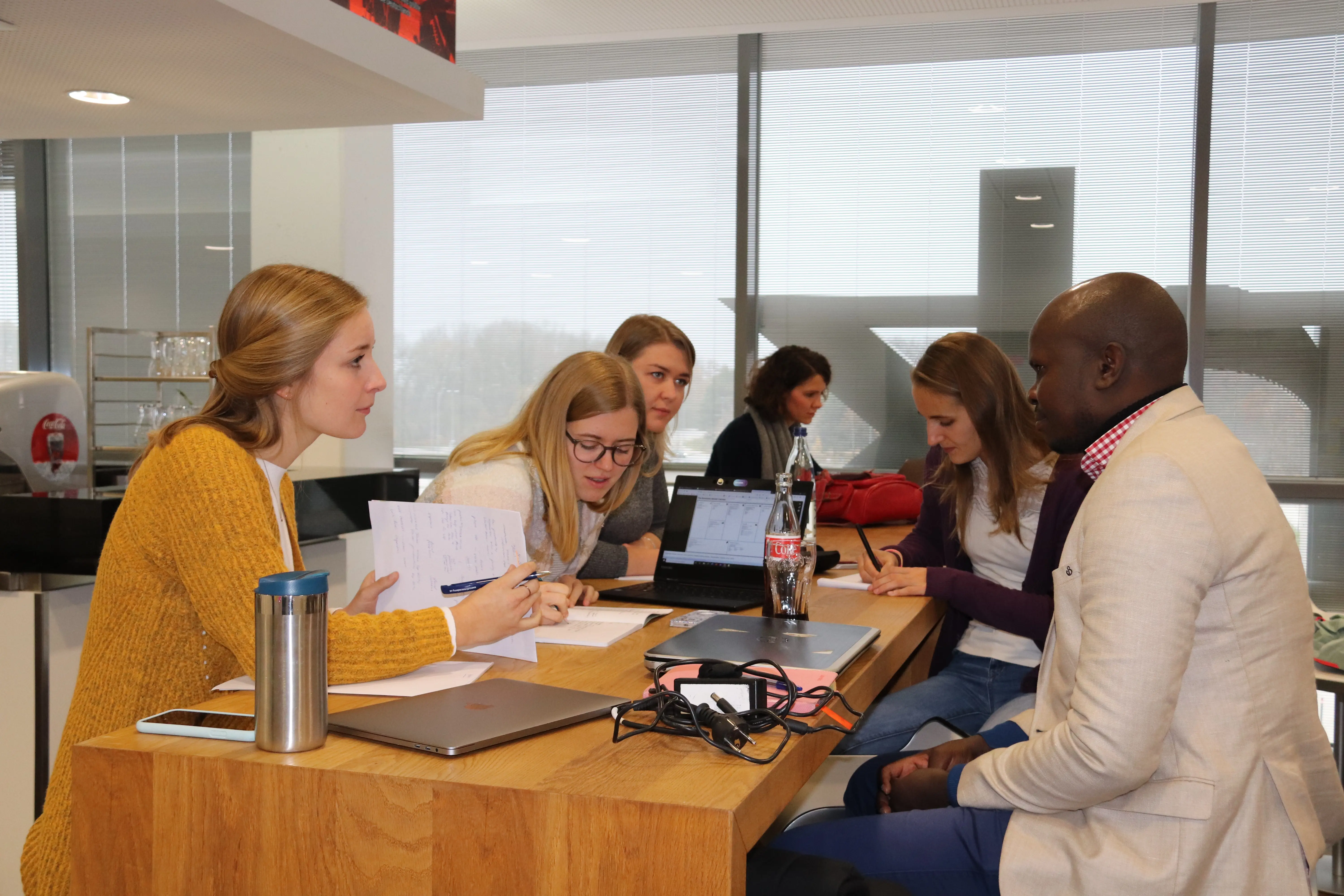
Abgeschlossene Forschungsprojekte
Internationales Forschungsnetzwerk "MultiMind"
Worum geht's?
Europe has experienced several waves of migration within the 20th century that have led to the establishment of multilingual communities across the continent. A current large influx of migrants and refugees will lead to a considerable increase of multilinguals within Europe. Understanding the benefits and challenges of being multilingual is crucial for the education, wellbeing, and employment of immigrants and can impact their integration and prospects in Europe as well as the prospects of the European countries.
The mission of Multi-Mind is to seek fundamental breakthroughs in multilingualism research whilst training the new generation of researchers in world-leading labs using cutting edge methodologies and allowing them to build the necessary background and skills fostering their career progress as independent researchers in academic or non-academic sectors, in the first international, multidisciplinary, and multisectorial program on multilingualism.
MultiMind will conduct fundamental research on multilingualism across disciplines in a range of different social and educational settings, including migration and refugee settings, to investigate the influence of multilingualism on language learning, cognition, creativity, and decision making, on brain function and structure, and its role as a reserve in atypical populations. These issues are of prime importance for the future construction of shared cultural, educational, and health settings across Europe. Indeed, one of the big current challenges in Europe is the integration of refugees and immigrants into European states and the integration among European citizens living in different countries in Europe. Inevitably, this challenge starts and has the best chances to be won by focusing on the educational systems and on the influence that the use of languages has in daily life.
MultiMind is international in nature and will federate world-leading scientists from European and non-European countries with proven expertise conducting research in specific types of multilingual populations and methodologies. To address the interplay of multilingualism with education, cognition, brain, and health it is necessary to take a multidisciplinary approach. Therefore, MultiMind is a multidisciplinary consortium comprising researchers within linguistics, psychology, education, neuroscience, and speech & language therapy. MultiMind is also a multisectorial project that includes not only academic, but also non-academic beneficiaries and partners from education, health, publishing, and IT. Non-academic beneficiaries and partners will provide training in evidence-based research and non-academic secondments. This will enable early stage researchers (ESRs) to put theoretical knowledge into practice, experience working within non-academic organisations and develop transferable skills and will prepare ESRs for employment not only within the academia, but also in a range of other professions within the private and public sector. These organisations will also benefit from the knowledge obtained from MultiMind that promises to lead to best practise for inclusive education and health. It turn, this will have a significant impact on multilingual societies in Europe and across the globe.
Ansprechpartnerin
Prof. Dr. Tanja Rinker
ERASMUS+-Projekt „Sprache Macht Europa"

Worum geht’s?
Sprachenvielfalt als Ressource in Schule und LehrerInnenbildung
Als koordinierende Einrichtung übernimmt die KU, insbesondere das Team des Studiengangs DaZ, im Rahmen des Projektes „Sprache Macht Europa" die Leitung eines Verbundes aus der Paris Lodron Universität Salzburg in Österreich, der Universität Straßburg in Frankreich, der Universität Pristina im Kosovo, dem gemeinnützigen Verein Education Unlimited e.V. aus Stuttgart sowie den Schulen Pôle Educatif Protestant de Strasbourg und der Michael-Friedrich-Wild-Grundschule Müllheim. Gemeinsames Ziel ist die Entwicklung eines transnationalen, interkulturellen Schulentwicklungskonzepts zur Förderung gelebter Mehrsprachigkeit in den Jahrgangsstufen 3 bis 6. Die kulturelle und sprachliche Vielfalt Europas wird dabei als Chance und Ressource für die Schule und LehrerInnenbildung gesehen.
Eckdaten
Laufzeit: 2022-2025
Projektwebsite: Lingua Creativa
Ansprechpartner
Was ist wirklich schwer? Annahmen zur Schwierigkeit sprachlicher Strukturen auf dem Prüfstand - abgeschlossen
Worum geht's?
Um Deutschlernende vor Überforderung zu bewahren, werden häufig sprachliche Strukturen vereinfacht. Dabei verlassen sich Lehrende meistens auf ihre Intuition und Erfahrung. Aber auch der Gemeinsame Europäische Referenzrahmen (GER) nimmt an, dass es bestimmte sprachliche Strukturen gibt, die für Deutschlernende schwieriger zu erwerben und zu verarbeiten sind als andere Strukturen. Allerdings fehlt bislang der systematische empirische Nachweis, dass dem auch tatsächlich so ist.
In einer Blickbewegungsstudie untersuchen wir die Verarbeitung ausgewählter Strukturen (z.B. Aktiv vs. Passiv) durch L1-Sprecherinnen und Sprecher des Chinesischen mit fortgeschrittenen Deutschkenntnissen und vergleichen die Ergebnisse mit L1-Sprecherinnen und Sprechern des Deutschen.
Dieses Projekt findet in Zusammenarbeit mit der Philipps-Universität Marburg (Prof. Dr. Ulrike Domahs, Prof. Dr. Kathrin Siebold) statt.
Publikation:
Weiss, A. F., Domahs, U., Rinker, T. & K. Siebold (in press). Ist das wirklich schwer? Sprachliche Phänomene auf dem Prüfstand. In: C. Ott & B. Bock (Hrsg.) Verständlichkeit - Zugänglichkeit - Barrierefreiheit: Sprachbezogene Rezeptionsherausforderungen und Inklusionspotentiale von Bildungsmedien. Forum Angewandte Linguistik. Peter Lang.
Ansprechpartnerin
Dr. Anna Fiona Weiß
Internationales Forschungsprojekt "ENglish Reading Online" (ENRO) - abgeschlossen
Worum geht's?
In diesem internationalen Projekt stehen das Leseverstehen im Englischen und die damit verbundenen Kompetenzen bei Universitätsstudierenden im Mittelpunkt. Im Rahmen einer Online-Studie werden die Daten von zahlreichen Probandinnen und Probanden aus verschiedenen englischsprachigen und nicht-englischsprachigen Ländern erhoben. Ein zusätzlicher Fragebogen sammelt darüber hinaus Informationen über den demographischen und sprachlichen Hintergrund der Studienteilnehmerinnen und -teilnehmer.
Diese Daten sollen zu einer öffentlich zugänglichen Datenbank zusammengefasst werden, die kontinuierlich erweitert wird und umfangreiche Ergebnisse zum Leseverhalten im Englischen und die damit verbundenen Kompetenzen (Buchstabieren, Vokabeln, Hörverstehen etc.) liefert. Zugleich liefert sie detaillierte Daten über die individuelle Sprachkompetenz und den Hintergrund der Probandinnen und Probanden.
Anhand der Daten wird es unter anderem möglich sein, die Einflüsse verschiedener L1 auf die Lesekompetenz im Englischen zu untersuchen.
Das Projekt findet in Kooperation mit über 50 Partnern weltweit statt. Die Leitung haben Prof. Dr. Kuperman (McMaster University, Canada) und Dr. Noam Siegelman (Haskins Laboratories, USA).
An der KU wird das Projekt gefördert durch ProFOR-Mittel.
Publikation:
Siegelman, N. (...) Weiss, A. F. (...) & V. Kuperman (2023). Rethinking First Language - Second Language Similarities and Differences in English Proficiency: Insights From the ENglish Reading Online (ENRO) Project. Language Learning, 1-46. (DOI: 10.1111/lang.12586)
Ansprechpartnerin
Dr. Anna Fiona Weiß