Fabio Tanga
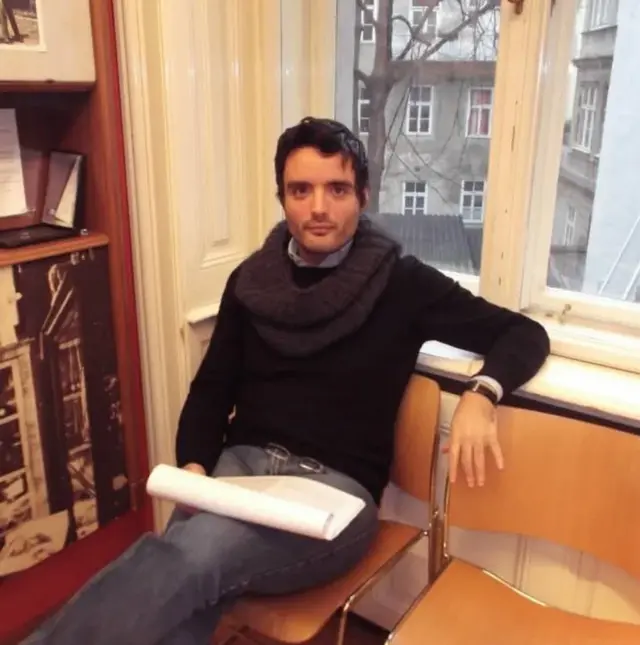
Curriculum vitae
Fabio Tanga (24/10/1983)
International PhD in Classical Philology (Salerno/Málaga, 2011); International post-doctoral fellowship (Salerno/Málaga, 2012); Invited Researcher (Christ Church College, Oxford, 2012); member of the international project Azione Integrata Italia-Spagna (Salerno, 2009); member of the PRIN project Parola e musica nel teatro di Eschilo (Salerno, 2010); Master in Storia e Storiografia delle Età Antiche (2014). Teaching Fellow (Málaga, 2010-2012); Lecturer (Salerno 2008/2010; 2017-2019); Research Associate in Greek Language and Literature (Salerno, 2007-2026); National Scientific Habilitation (ASN) as Associate Professor of Greek Language and Literature (Italian Ministry of University and Research, 2024–2035). Author of: Plutarco, La virtù delle donne, edizione critica, traduzione italiana e note di commento (Brill, 2019); Plutarco, Educare i giovani, edizione critica e note di commento (Brill, 2026, Forthcoming); Editor of: A Life Devoted to Plutarch: Philology, Philosophy and Reception (Brill, 2021); Contributor to the Brill’s Companion on Ancient Women and War (Brill, 2025).
Author of extensive studies on various treatises of Plutarch’s Moralia (De exilio, De fraterno amore, Quaestiones naturales, Quaestiones Graecae, Septem Sapientium Convivium, De adulatore et amico, Apophthegmata Laconica, Mulierum virtutes, De erudiendis mulieribus, De tuenda sanitate praecepta, De Pythiae oraculis, De gloria Atheniensium, Quaestiones convivales, De esu carnium, De liberis educandis and Consolatio ad Apollonium), frequent contributor as invited lecturer, speaker, and discussant to numerous international conferences, symposia, and workshops.
Research Interests: Greek Literature in Imperial Age; Study, translation, commentary, and reception of Plutarch’s work; Humanist and Renaissance Reception of Plutarch’s Moralia (by Guarino Guarini, Alamanno Rinuccini, Luca Antonio Ridolfi, Angelo Barbato, Stefano Negri, Louis Rousard, Guillaume Plançon, Diego Gracián, and Thomas Kirchmeyer); Ancient Pedagogy; Gender Studies in Antiquity; Sophocles’ Reception across Europe, Asia, and Latin America.
Scientific consultant and referee for Brill, De Gruyter, Philologus, Mnemosyne, Cuadernos de Filología Clásica, Estudios Clásicos, Studia Philologica Valentina, and Archivi delle Emozioni; member of the editorial board of Ploutarchos and Humanitas; External PhD Referee for the University of Oviedo (2021); member of the Scientific Committee for the volume A representação da velhice e do envelhecimento em narrativas literárias e culturais (Lisboa, 2025); member of the International Plutarch Society; member of the European Plutarch Network.
The Project
As a Research Fellow at the Center for Advanced Studies of the Catholic University of Eichstätt-Ingolstadt, I will be developing my research project: “Humanist And Renaissance German Translators of Plutarch’s Moralia”. This work will be conducted within a premier center of excellence for Plutarchean studies in Germany and Europe, providing an elite scholarly environment for the investigation of classical reception. My research will focus on the intellectual circulation and reception of Plutarch’s work during the 15th and 16th centuries, specifically examining the translations and commentaries produced by key German humanists such as Willibald Pirckheimer, Philipp Melanchthon, Joachim Camerarius, and Simon Grynäus.
The project will involve a broad range of interconnected disciplines, including Greek and Latin Literature, Humanistic Philology, Translation Theory, History of Philosophy, History of Religions, and the History of Modern Europe. Throughout this process, I will benefit from the collaboration and methodological expertise of the distinguished scholars at the Center, whose excellence in these fields will be essential for the project’s development.
A fundamental component of my work will be the ecdotic and exegetical analysis of these Renaissance Latin translations. By performing a systematic collation between the original Greek tradition and the humanist versions, I will reconstruct the translators’ philological modus operandi and identify the interpretive layers they introduced. This analytical work will be directly functional to the critical edition and editorial processing of Plutarch’s texts, a monumental task that is already excellently organized, directed, and coordinated by Prof. Dr. Anna Ginestí Rosell, President of the German Section of the International Plutarch Society. Her leadership ensures a rigorous scientific framework for the precise identification of textual emendations, conjectures, and the sophisticated exegetical strategies employed by Humanist and Renaissance scholars to adapt ancient moral thought to their contemporary cultural and religious context.
The historical and academic synergy with Eichstätt—the birthplace of Willibald Pirckheimer—will provide the ideal setting for this study. Through this fellowship, I aim to contribute to the international scholarly discourse on how the philological transformation of ancient knowledge by German scholars helped forge the intellectual and ethical foundations of early modern Europe.
My work is defined by a commitment to international scientific cooperation and the promotion of dialogue between diverse scholarly traditions. I place great importance on the dissemination of research results, seeking to ensure that classical scholarship remains an accessible resource for both the academic community and a broader audience. In this perspective, my upcoming project at the Forschungskolleg Dialogkulturen of the University of Eichstätt-Ingolstadt will serve as a significant moment for high-level international research and collaboration within a stimulating and welcoming environment.