K'Universale 2026/27
Fascist Spaces

In January 2025, during the inauguration ceremonies for U.S. President Donald Trump, Elon Musk caused a global stir: standing in front of a cheering crowd, he twice performed a gesture widely interpreted as a Hitler salute. Since then, the incident has become a symbol of an accelerating "global fascisization" (Toscano) in the 21st century.
New concepts such as "late fascism," "post-fascism," and "fascisization" attempt to capture the increasing dynamic of these developements. They offers ways of thinking about new forms of fascist discourse that are no longer organized solely on a national level, but instead take shape within digital spaces and transnational networks, and are characterized by a convergence of neoliberal, technological, and authoritarian power structures.
These discussions raise important question: How do the new fascisms of the 21st century emerge? What spaces do they occupy—digital, political, and social—and how are they, in turn, shaped by those spaces? Furthermore, how do they alter our conceptions of democracy, the public sphere, and coexistence?
Our lecture series invites participants to explore contemporary manifestations of 21st-century fascism as a spatial practice and, with the guidance of our speakers, examine these phenomena through an interdisciplinary lens.
Schedule
[ONLINE] 09.11. | Fascism without the West? | Alberto Toscano (Simon Fraser University)
Interwar European fascisms imagined themselves as militant reactions to a decolonial race war that was accelerating the decline of the West. Many of their contemporary epigoni, steeped in nostalgias for imperial White world supremacy, also frame their movements in these civilizational terms. Yet fascism has never been a term easily contained by the relations of domination between “the West and the Rest.” To the contrary, some of the most vital theories of fascism have not just emerged outside of North Atlantic imperial heartlands but have also concerned non-Western regimes and movements. This talk will explore some of these theories, from Tosaka Jun’s account of Japanese “emperor-fascism” to Ghassan Kanafani’s treatment of Arab authoritarian states, from Mahmood Mamdani’s analysis of “neo-colonial fascism” in Idi Amin’s Uganda to Sumit Sarkar’s portrayal of the fascist dimensions of Hindutva. In what sense can we speak of fascisms outside, or even without the West? And how are these fascisms shaped by the changing forms of “Western” (US and European) imperialism? How can we rethink “fascist spaces” – including the geopolitical and world-systemic orderings that frame processes of fascization – without assuming the view from the erstwhile Western metropolitan centre?
Alberto Toscano is Adjunct Professor at the School of Communication, Simon Fraser University
[IN CLASS] 23.11. | “Chronicle of a Death Foretold.” Cybernetics and Preemptive Fascism | Katrin Köppert (HU Berlin)
The idea of a technology that seeks to predict the future by referencing the past is only partially comprehensible. For those for whom recursion is associated with a return to a place of brutal violence and a time of lawlessness, the mechanization of recursive operations signifies the closure of the future and, in more than a few cases, death. This lecture presents a chronicle of cybernetics as “a death foretold.” The lecture focuses on suicides, primarily among racialized youth, resulting from communication with chatbots. I examine this form of “Racial Death” as the materialization of an AI that technologically conjures up the death of those who do not conform to the new fascist body (Herzog 2025). Using the relation of AI chatbots and suicidality as example, the lecture addresses the question of the extent to which AI rejects all aspects of racialized life (McKitterick 2020) and, through them, provides a matrix for fascism. To this end, I introduce the concept of “preemptive fascism.”
Katrin Köppert is an art and media scholar whose work focuses on media theories of digital colonialism, critical theories of computation at the intersection of art, design, and visual cultures, digital memory studies, queer media studies. She is professor for art history / popular cultures at the Academy of Fine Arts Leipzig. Recent publications include Knowing memes means knowing the internet as irrevocably black as fuck. Memetische Enteignung und/als Emanzipation (2025) and Hologrammatiken der Gewalt: Digitale Erinnerung und Computational Blackface (2026).
[IN CLASS] 11.01. | Simon Strick
[IN CLASS] 18.01. | Anna-Verena Nosthoff & Felix Maschewski (Uni Oldenburg + HU Berlin)
[ONLINE] 25.01. | The New Fascist Body: Ableism and Affective Politics from Nazism to the Contemporary Far Right |Dagmar Herzog (City University New York)
Dagmar Herzog explores the emotional workings of novel forms of fascism in Germany, highlighting recurrent themes of “sexy racism” and anti-disability politics in the AfD as well as their antecedents in Nazism and before – resituating Nazism in a longer history of lethal malice to the vulnerable and the promise of national greatness. In the present, disinhibiting, deliberately contradictory messaging, and the “suture” of exciting libidinal transgression with ableist malice, construct not a backlash but a “frontlash,” an anticipatory preemptive reaction against progressive inclusionary policies that have not even yet been widely implemented.
Dagmar Herzog is Distinguished Professor of History at the Graduate Center, City University of New York. Her books include the prizewinning The Question of Unworthy Life: Eugenics and Germany’s Twentieth Century, Cold War Freud: Psychoanalysis in an Age of Catastrophes, Sexuality in Europe: A Twentieth-Century History, and Sex after Fascism: Memory and Morality in Twentieth-Century Germany. Her most recent book, The New Fascist Body (Wirklichkeit Books, 2025), analyzes the libidinal and aspirational fantasies of contemporary far-right politics. As a 2026 Joy Foundation Berlin Prize Fellow at the American Academy in Berlin, she will pursue her new project on Adorno's Gruppenexperiment of 1950-51, Fascism’s Lingering: Regime Change and Moral Reckoning.
Contact
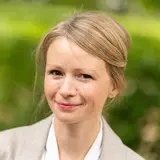
Prof. Dr.
Imke
von Maur
Professor for Philosophy