![[Translate to English:] Studierende am Campus der KU](/fileadmin/_processed_/9/8/csm_media.ku_55084_9f8b5bad3c.webp)
Education (Pedagogy)
Degree
Bachelor of Arts
Semester fee
88
Euro
Start of the program
Winter semester
Standard length of the program
6
Semester
Place of study
Eichstätt
Part-time studies possible
Yes
Do you want to understand how people learn, how education shapes our society, and how you can play an active role in this process? Then the Bachelor's degree program in Education is just right for you! During the program, you will explore current educational issues in a globalized and digitalized world: How can education be made more equitable? What role do values and responsibility play? How can educational and upbringing processes be effectively supported? You can expect a program that critically examines academic foundations and relates them to educational practice. This qualification for professional educational practice opens up a wide range of career opportunities for you.
Why study the BA in Education?
Uniqueness & diversity of the program's academic offer
Educational policy and educational philosophy, together with adult and continuing education and social pedagogy, form the three equally important specializations in this degree program, which is unique in Germany in this form. In addition, other relevant disciplines – such as empirical educational research, psychology, sociology, and school pedagogy, among others – complement the diverse range of courses offered.
As a result, the program offers students the opportunity to engage holistically with education and upbringing processes from a wide variety of perspectives, within the context of current societal transformations.
Particular emphasis is placed on issues of values formation, social responsibility, transformative education, and national and global challenges in education and development. In this way, the degree program makes a significant contribution to developing contemporary and future-oriented educational approaches for the 21st century.
Human-centered approach
The program is tailored to the prerequisites, needs, and aspirations of its students and
- takes into account their educational backgrounds and supports individual personal development.
- through its flexible full-time and part-time study models, the program makes it possible to combine academic studies with professional and family responsibilities.
- offers a personalized learning environment in both teaching and academic advice.
- also provides the opportunity of pursuing a university education for professionals with vocational qualifications, such as state-certified early childhood educators or those with a master craftsman’s certificate, as well as graduates of vocational high schools (FOS) and business high schools (BOS).
- opens the door to a wide range of attractive career opportunities.
The program also focuses on a scientifically grounded and practice-oriented examination of successful educational and developmental processes of the individual across the entire lifespan. This takes place against the backdrop of organizational and sociopolitical conditions and challenges.
Educational professionalization: Interlinking theory & practice
Through a well-grounded academic program that is both practice- and experience-oriented, students acquire a high level of professional pedagogical competence.
Throughout the entire program structure, foundational knowledge in educational theory and research methodology is closely integrated with practical application.
This is achieved through numerous seminars, for example, through project work, field trips, and guest lectures from the professional practice. The two internship modules, the learning research project, and the final thesis also deepen a critical and reflective connection between theory and practice.
Wide range of career opportunities
This degree program opens the door to a wide range of attractive and promising career opportunities in various fields of education.
You can work in a management position, as an educational specialist, or in a wide range of other roles at numerous institutions in adult and continuing education, social pedagogy, and the fields of educational policy and philosophy.
In addition, this program allows you to pursue subsequent Master's level studies. Building on this foundation, you can pursue an academic career at a university or work at research institutions.
The program in detail
Contents
Students acquire specialized skills that enable them to research and design educational and teaching processes based on knowledge of educational theory and using research methods from the field of Education. In addition, the program fosters personal and social skills, such as communication and collaboration skills, as well as a reflective engagement with ethical issues in the field of education.
Specializations
Across the three specializations – educational policy and philosophy, adult and continuing education, and social pedagogy – students acquire subject-specific theoretical knowledge throughout the program structure and relate this knowledge to its practical relevance for various fields of educational practice.
Educational policy and philosophy of education
The specialization in Educational Policy and Philosophy of Education offers students the opportunity to qualify for leadership positions in educational policy and administration and to guide transformation processes at educational institutions. This specialization places particular emphasis on fostering analytical and self-reflective skills through a systematic examination of fundamental concepts in pedagogical practice and educational research, combined with reflection on one’s own educational and upbringing history. Special attention is given to questions regarding educational goals and the norms and principles of democratic and equitable education.
Program specialization coordinator:
Prof. Dr. Krassimir Stojanov, Chair of Educational Philosophy and Systemic Education
Adult and continuing education
In the context of lifelong learning, adult and continuing education represents the largest sector in the German education system and therefore offers a wide range of interesting career paths and fields of activity. To this end, students in this specialization acquire professional competencies in adult education. For example, they develop innovative and sustainable educational programs for adults that are grounded in theory and oriented toward practice. The focus is on clarifying the specific characteristics of adult learning and on how to successfully design, implement, and evaluate attractive educational programs – as well as workshops, courses, and seminars – using participant-centered methodological and didactic approaches. Additional course content addresses topics such as transformative learning, as well as organizational and human resource development.
Program specialization coordinator:
Prof. Dr. Anita Pachner, Professorship of Lifelong Learning
Social pedagogy
The Social Pedagogy specialization examines, from an educational science perspective, transformative processes of education, upbringing, and socialization in the context of (global) societal, political, and ecological upheavals. The focus is on issues of social inequality and participation, the relevance of personal history in the context of professional practice, transitions throughout the life course, and the forms, conditions, and (historical) developments of social pedagogical support across the entire lifespan. Research and teaching are guided by perspectives sensitive to power dynamics and the dynamics of forgetting, as well as by reconstructive research methods, and integrate various social and action theories with empirical analyses.
Program specialization coordinator:
Prof. Dr. Tilmann Kallenbach, Professorship of Social Pedagogy
Other study contents
In addition to the coursework in the three specializations, the following topics from other disciplines relevant to education complement the diverse range of courses offered:
Empirical educational research
In the field of empirical educational research, students acquire fundamental knowledge of qualitative and quantitative research methods and apply this knowledge in a practice-oriented manner.
Internships
Two internship modules allow students to take a critical-reflective theory-practice transfer.
Psychology & sociology
Course content from developmental and educational psychology, as well as the sociology of education, provides a holistic perspective on the upbringing and educational processes of the individual within the context of societal conditions.
Overarching topics
Other education-related topics, such as “Digital Education”, “Fundamentals of the School System”, and “Education and Migration”, are the ideal addition to the curriculum.
Studium.Pro
Students can select a module from the entire Studium.Pro offer according to their interests. The KU Eichstätt-Ingolstadt’s Studium.Pro program expands the curriculum to include interdisciplinary course offerings.
Structure
The program is structured as a full-time or part-time degree program totaling 180 ECTS credits. It lasts 6 semesters on a full-time basis and 12 semesters on a part-time basis, and is divided into a foundational phase and a specialization phase in each case.
Foundational phase
Full-time: 1st through 4th semester / Part-time: 1st through 8th semester
Fundamental knowledge of education and pedagogy, as well as general methodological and ethical-reflective skills
- Introduction to Education
- Basic modules in the program’s major areas
- Education Policy and Philosophy of Education:
- Character Development, History and Theories of Education, Philosophy of Education, and Political Theory
- Adult and Continuing Education:
- Person-Centered Practical Competencies and Organization-Centered Practical Competencies I and II
- Social Pedagogy:
- Life Stages and Life Situations, Pedagogical Research on Childhood, Adolescence, and Families, as well as Pedagogical Assessment, Intervention, and Evaluation.
- Research Methodology Modules:
- Introduction to Empirical Educational Research, Educational Research Using Qualitative and Statistical Methods, Empirical Internship
- Internship Modules
- Modules in Developmental and Educational Psychology, Sociology, School Pedagogy, Digital Education, and Education and Migration
- Studium.Pro Module
Specialization phase
Full-time: 5th and 6th semesters / Part-time: 9th through 12th semesters
Selection of two of the three specializations to develop an individual career-oriented specialization and to deepen studies and research
- (Practice-oriented) specialization modules in two specializations
- Learning research project in one specialization
- Bachelor's thesis & Bachelor’s colloquium in one specialization
Rankings and assessments
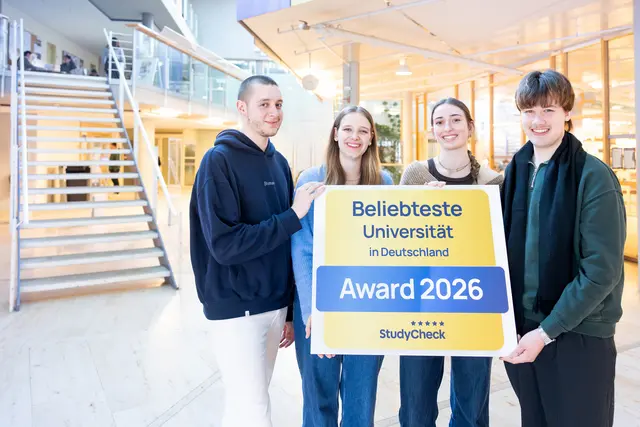
KU students and alumni have voted for their University to be Germany's most popular university in the 2026 ranking of the online portal StudyCheck. This is the fourth time in a row, as KU was also voted the most popular university in 2021, 2022 and 2024. The ranking was based on over 78,000 evaluations for more than 500 higher education institutions and universities. 97 percent of students questioned for the ranking would recommend studying at the KU to others.
"There is no better praise for a university than almost 100 percent of students and alumni agreeing: I can only recommend studying at the KU! That is why we are very pleased with the ranking’s outcome, because it expresses the high level of satisfaction of our students," says KU President Prof. Dr. Gabriele Gien.
Study abroad
Thanks to its flexibility, the study plan allows students to spend all or part of their time staying abroad by taking equivalent courses at the Faculty's Erasmus partner institutions, such as the University of Oulu, Aristotle University of Thessaloniki, Cardinal Stefan Wyszyński University in Warsaw, Sofia University, and many others. The KU maintains a network of partnerships with approximately 300 universities worldwide. The KU's International Office provides support with planning and offers information on the various funding options.
In addition, it is possible to complete both internship phases (Internship I and II) abroad to gain practical experience in a global context and open up international career opportunities. The International Internship Service offers advice and support. The learning research project in the 5th semester can also be conducted at international and/or intercultural educational institutions.
Connection to practice
Throughout the entire program structure, the curriculum closely integrates theory and practice. This includes both two integrated practical training phases and practice-oriented courses in various modules:
Semester 1
In the module “Introduction to Education: Theory – Practice – Reflection”, a field trip seminar provides practical insights into various professional and practical fields within the three specializations. Through direct exchange with local partners in the field, students establish initial contacts and gain a comprehensive understanding of the institutional frameworks, target groups, and areas of activity of these organizations.
Semester 2
In the “Internship I” module, students gain their first practical professional experience through a 140-hour field placement in an area of educational practice of their choice within the field of education. This experience is then reflected upon in a theory-based seminar.
Semester 3
As part of the “Internship II” module, students expand and deepen their professional pedagogical skills through 140 hours of practical experience in an institution of the professional practice. To this end, students may either continue the work they began in Internship I or try a new field of practice.
Semester 4
In the “Empirical Internship” module, students apply the concepts covered in the qualitative and quantitative research methods modules taken in previous semesters to specific research questions encountered in practice.
Semester 5
In the “Learning Research Project” module, students explore a relevant question in the field of education that they have chosen themselves. This question may, for example, be based on experiences from their academic internships. Students use theoretical frameworks to plan their first independent research project, carry it out in practice, and discuss their research findings.
Semester 6
The modules for in-depth, practice-oriented study in the specialization areas are specifically designed to be practice-oriented in order to ensure the transfer of theory to practice.
As part of the “Bachelor's Thesis”, students may continue the research topic from their learning research project or conduct a methodologically substantiated investigation of another issue from the field of education based on key theoretical perspectives, and derive implications for (research) practice from their findings.
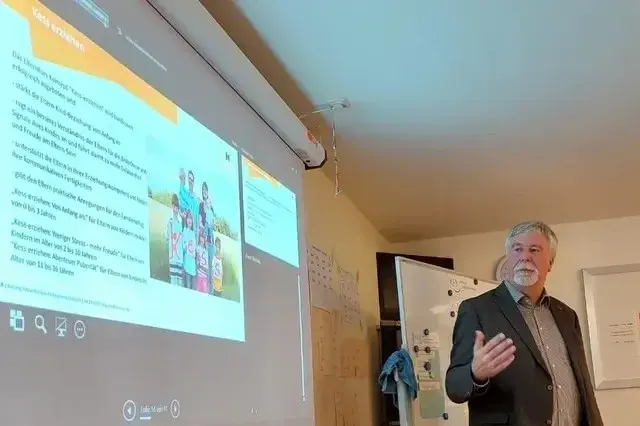
In numerous seminars within other modules, students apply what they have learned in practice through project work, guest lectures, and field trips.
For personalized advice and support in finding an internship and exploring funding options, students can turn to the degree program's subject advisor, the KU Career Service and the International Internship Service.
Career opportunities and professional fields
Academic career
A Bachelor’s degree provides access to subsequent Master's studies in education as well as a subsequent academic career at universities or employment at research institutes.
Career prospects
In addition, the skills acquired during the program open up a wide range of career prospects in a constantly evolving education and job market. It is possible to work as an education specialist, head of an educational institution or department, educational professional, lecturer, coach, or in many other roles, including in the following educational and professional fields:
Advice and support
e.g. education and parenting advice, organizational consulting, philosophical practice and advice
Educational management and administration
Planning, management, and organization of educational programs and offerings
Educational work in adult and continuing education
e.g., at adult education centers, adult education organizations affiliated with professional associations, (subject-specific) vocational academies, or numerous other educational institutions
Educational work in political organizations with educational departments
e.g., in political parties, labor unions, foundations, NGOs, or advocacy groups, as well as in international education and development work
Fields of work in social pedagogy
in work with children, youths, families, or seniors, as well as in prevention, support, and integration work
Organizational and staff development
in the public service or private comapnies
Civic engagement
Initiating and supporting projects in the area of social participation



Testimonials
![[Translate to English:] Johanna Jagella](/fileadmin/_processed_/5/0/csm_Johanna_Jagella__4.Semester__300dpi_fdb4abdb3c.webp)

“For me, it’s the exchange with my fellow students that really makes the program what it is. Everyone brings different experiences and perspectives to the table, which allows me to gain new insights time and again. I also appreciate that the professors are open to our opinions and that we can actively help shape the…
“For me, it’s the exchange with my fellow students that really makes the program what it is. Everyone brings different experiences and perspectives to the table, which allows me to gain new insights time and again. I also appreciate that the professors are open to our opinions and that we can actively help shape the program through constructive feedback.”
![[Translate to English:] Oliver Bittel](/fileadmin/_processed_/f/5/csm_Oliver_Bittel__4.Semester__300dpi_0a62b92192.webp)
“The degree program constantly offers new perspectives and opportunities for reflection on oneself, educational practice, or world events. You are encouraged to think critically, discuss your opinions, and support them with scholarly evidence. I really appreciate these opportunities for professional growth in the degree program.”
“The degree program constantly offers new perspectives and opportunities for reflection on oneself, educational practice, or world events. You are encouraged to think critically, discuss your opinions, and support them with scholarly evidence. I really appreciate these opportunities for professional growth in the degree program.”
![[Translate to English:] Linda Bernet](/fileadmin/_processed_/e/6/csm_Linda_Bernet__2.Semester__300dpi_9af9d8057c.webp)
“What I especially appreciate about the KU is the personal atmosphere. You make lots of connections in no time, run into each other on the campus all the time, and the lecturers interact with students as equals.”
“What I especially appreciate about the KU is the personal atmosphere. You make lots of connections in no time, run into each other on the campus all the time, and the lecturers interact with students as equals.”
![[Translate to English:] Julia Schäfer-Häck](/fileadmin/_processed_/6/b/csm_Julia__2._Semester__300dpi_5cbaba3773.webp)
“I really enjoy studying at the KU. Everyone is very supportive, and the professors make it possible for me to study even with my child when, on rare occasions, there is nobody available to care for my child while I have courses.”
“I really enjoy studying at the KU. Everyone is very supportive, and the professors make it possible for me to study even with my child when, on rare occasions, there is nobody available to care for my child while I have courses.”
The KU
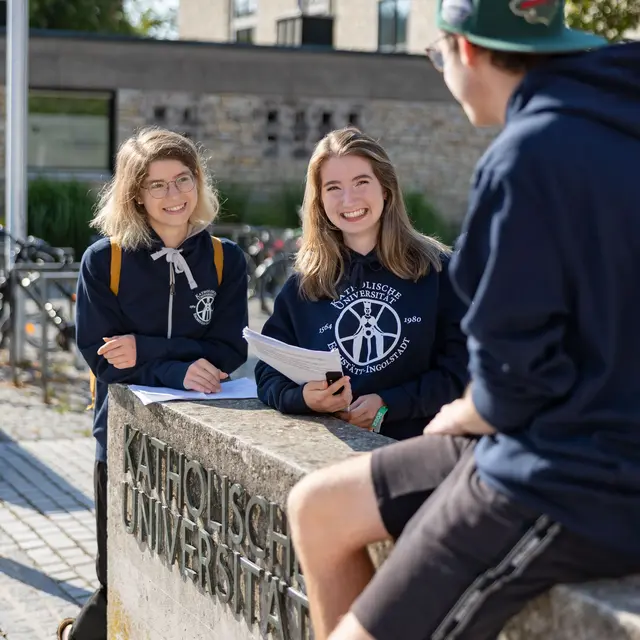
The KU has two campuses: Eichstätt and Ingolstadt. Seven faculties are located in Eichstätt. The Ingolstadt School of Management (WFI) and MIDS (Institute of Applied Mathematics, Machine Learning and Data Science) are located on our Ingolstadt campus.
This degree program is taught on our Eichstätt campus.
Studying in Eichstätt
 Study location
The district of Eichstätt and the city of Ingolstadt are located in the heart of Bavaria. This central location also means that the KU is easy to reach. Eichstätt impresses with its unique combination of baroque architecture, modern amenities and the picturesque nature of the Altmühltal natural park.
Campus
Short distances and lavish green spaces characterize the KU campus in Eichstätt. The KU is a campus University with modern facilities. The buildings on campus are located close to the Eichstätt old town.
More than just a degree
Studying at the KU not only provides you with the specialist knowledge you need, but also aims to open up real future prospects for its students. We want to support our students in finding their own personal path to their individual dream future! The question is not "What career do I want to pursue?", but rather "Who do I want to be?"
Advisory Service
Some offers and study conditions are different for international students – our International Office is happy to provide help and support. If you have any questions, please feel free to contact our team. We are happy to accompany you on your way to the KU and hope that we can welcome you in person soon!
Armelle
Langenwald
International degree seeking students coordinator - Campus Ingolstadt
Building
Hauptbau
|
Room: HB-209

Alice
Rohn
International degree seeking students coordinator - Campus Eichstätt
Building
Domplatz 8
|
Room: DP8-203 | Campus Eichstätt
Enrollment
Requirements
Subject-specific university entrance qualification (Fachgebundene Hochschulreife)
subject-specific entrance qualification (social branch)
subject-specific entrance qualification (social branch)
Enrollment period winter semester
Aug 10
-
Oct 02
Admission restriction
No
Selection procedure
No
Application
The application process for international applicants is now completely digital. You can register online in our application portal and carry out and submit your application. After you have carried out the application and uploaded your documents, you do not need to send your documents to us again by post. You do have to submit certified true copies only if you are admitted at the time of enrollment.
Depending on the course of study, you may be asked for information on internships, professional experience, etc. Please upload the relevant documents in the upload area for all the information you provide, even if these are not mandatory fields!
Before you start the application process, please read the additional information on this page, in particular the information on the respective (German) language requirements and university entrance qualifications.
Application for international prospective students
Please note that the study requirements, deadlines and application processes for international prospective students are often different. Information for international applicants and applicants who completed their school-leaving certificate or qualifying degree outside Germany can be found here: