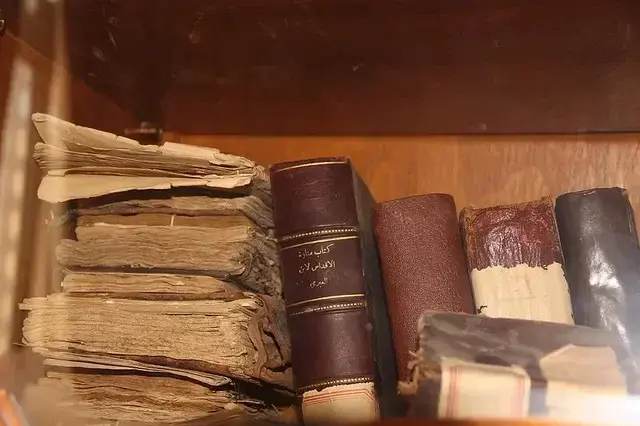
M15: History of Science & Research Methods
History of Science is the academic discipline concerned with the development of sciences over time. It examines how scientific knowledge originated and changed, and which social, cultural, political, and philosophical contexts played a role in these processes. It aims not only to reconstruct what happened in the history of science but also to understand why it happened—critically analyzing the processes, ruptures, and dynamics in the transformation of knowledge.
Research Methods are systematic procedures and techniques for obtaining, analyzing, and interpreting scientific findings. They encompass qualitative, quantitative, and hermeneutic approaches, enabling the systematic, verifiable, and methodologically reflected processing of research questions.
History of Science & Research Methods in the MA Eastern Christian Studies
The module M15: History of Science & Research Methods consists of three learning units:
- M15.1: Welcome Week (1 ECTS)
- M15.2: History of Science of Eastern Christian Studies (1 ECTS)
- M15.3: Introduction to Historical Science (1 ECTS)
The required assessment is a written term paper (2 ECTS).
The module comprises a total of 5 ECTS.
Course Content
- Emergence and development of the Study of the Christian Orient and Eastern Christian Studies as academic disciplines
- Central research directions, institutions, and key figures of Christian Oriental studies in the East and West
- History and significance of Eastern Christian research institutions (libraries, archives, museums, research centers) and their networking with ecclesiastical and university structures
- Integration of Eastern Christian research into larger cultural, political, and social contexts
- Introduction to academic and theological research within the field of Eastern Christian Studies
- Development and formulation of precise research questions and hypotheses
- Systematic literature and source research using modern databases and reference management software
- Methodological foundations of academic writing (structure, citation standards, argumentative framework)
- Reflection on scientific methods, research interests, and ethical standards in research
- Planning, structuring, and presenting individual research projects (term papers, Master’s theses, publications)
- Time management, self-organization, and academic career planning within the university environment
Learning Objectives and Competences
- Students possess in-depth knowledge of the emergence, development, and institutional characteristics of the Study of the Christian Orient and Eastern Christian Studies.
- They can explain central developmental lines, research directions, and methodological paradigms of the discipline's history and situate them within their historical, ecclesiastical, and cultural contexts.
- They are familiar with important figures, schools, and institutions of Oriental and Eastern Christian research and understand their significance for the development of the field.
- They analyze the interactions between science, church, politics, culture, and society in the history and present of the discipline.
- They are able to critically follow and independently formulate arguments related to the history of science.
- They master the fundamental principles, terminology, and techniques of academic work within the Theology of the Christian East.
- They can develop precise research questions and hypotheses and choose appropriate methodological approaches.
- They conduct literature searches and source analyses in a systematic and methodologically sound manner.
- They correctly apply established citation and editing standards and document their work steps transparently.
- They are able to conceptually plan, methodologically structure, and critically reflect on an academic research project (e.g., a Master’s thesis).
- They develop an awareness of questions of scientific ethics, interdisciplinary compatibility, and their own positioning within the research field of Eastern Christian Studies.
M15.1: Welcome Week
Course Instructor
N. N.
Academic Cycle and Workload
The learning unit is offered before each winter semester at the beginning of the Master's program. It comprises 1 SWS (= 0.5 ECTS) and approximately the same amount of independent preparation and follow-up time (= 0.5 ECTS).
M15.2: History of Science in Eastern Christian Studies
Course Instructor
Mag. theol. Annabell Kühnel
Research Assistant
Catholic University of Eichstätt-Ingolstadt


I am particularly looking forward to this course because it demonstrates how research on the Christian East has developed historically and which scientific perspectives, methods, and questions shape our understanding today.
I am particularly looking forward to this course because it demonstrates how research on the Christian East has developed historically and which scientific perspectives, methods, and questions shape our understanding today.
Academic Cycle and Workload
The learning unit is offered every winter semester. It comprises 1 SWS (= 0.5 ECTS) of digital self-guided learning and approximately the same amount of independent preparation and follow-up time (= 0.5 ECTS).
M15.3: Introduction to Historical Science
Course Instructor
N. N.
Academic Cycle and Workload
The learning unit is offered every winter semester. It comprises 1 SWS (= 0.5 ECTS) of digital self-guided learning (with synchronous meetings) and approximately the same amount of independent preparation and follow-up time (= 0.5 ECTS).