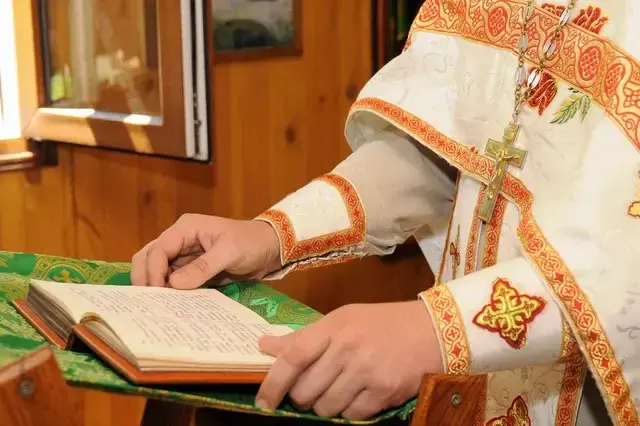
M7: Liturgical Studies
Liturgical Studies is the academic discipline that examines Christian liturgy in its historical developments, theological foundations, and concrete forms of celebration. It analyzes liturgical texts, rites, spaces, and music within their ecclesiastical and cultural contexts, combining historical, systematic-theological, and practice-oriented perspectives.
Liturgical Studies in the Master’s Program MA Eastern Christian Studies
The module M7: Liturgical Studies consists of two learning units:
- M7.1: [Placeholder Aspects of Eastern Christian Liturgy] (3 ECTS)
- M7.2: [Placeholder Accompanying Colloquium] (1 ECTS)
The required assessment is an oral examination (20 minutes) (1 ECTS).
The module comprises a total of 5 ECTS.
Course Content
- History and theology of liturgy in the Eastern Churches (Byzantine, Syriac, Coptic, Armenian, Ethiopian, etc.)
- Emergence and development of Eastern Christian rites from Late Antiquity to the modern era
- Analysis of main liturgical sources: Anaphoras, Euchologies, Lectionaries, Typika, hymnography
- Structure and theology of the Eucharist, the Liturgy of the Hours, and the Sacraments
- Comparative Liturgical Studies: Commonalities and differences between the families of rites (Antiochian, Alexandrian, Armenian, Constantinopolitan)
- Relationship between liturgy, theology, spirituality, and the liturgical year
- Connection of liturgy with architecture, iconography, and music
- Source criticism and the history of editions of liturgical texts
- Liturgical reform movements and modern developments in the East
- Significance of liturgy for ecclesiastical identity, ecumenism, and intercultural dialogue
Learning Objectives and Competences
- Students possess in-depth knowledge of the history, theology, and structure of the liturgies of various Eastern Christian traditions (Byzantine, Syriac, Coptic, Armenian, Georgian, Ethiopian, etc.).
- They understand the historical development processes of Eastern liturgies from Late Antiquity to the present and their interactions with theology, spirituality, and ecclesiastical art.
- They are familiar with the main sources of Eastern Christian liturgies (Euchologies, Anaphoras, Lectionaries, Typika, hymnography) and can analyze them critically.
- They recognize the liturgical families and rites (e.g., Antiochian, Alexandrian, Armenian, Constantinopolitan) and their mutual influences.
- They are capable of interpreting liturgical texts within their historical, theological, and cultural contexts.
- They confidently apply methods of liturgical research (historical-critical, comparative, text-analytical, phenomenological).
- They can reflect on the connection between liturgy, theology, piety, architecture, music, and iconography.
- They analyze the significance of liturgy for identity formation and the ecumenical understanding of the Eastern Churches.
- They develop sensitivity to the dynamics between tradition and reform within liturgical development.
- They are able to independently formulate liturgical research questions, process them methodologically, and present them in a scientifically sound manner.
M7.1: [Placeholder Aspects of Eastern Christian Liturgy]
Course Instructor
N. N.
Academic Cycle and Workload
The learning unit is offered every winter semester. It comprises 3 SWS (= 1.5 ECTS) of digital self-guided learning and approximately the same amount of independent preparation and follow-up time (= 1.5 ECTS).
M7.2: [Placeholder Accompanying Colloquium]
Course Instructor
N. N.
Academic Cycle and Workload
The learning unit is offered every winter semester. It comprises 1 SWS (= 0.5 ECTS) of synchronous contact studies and approximately the same amount of independent preparation and follow-up time (= 0.5 ECTS).