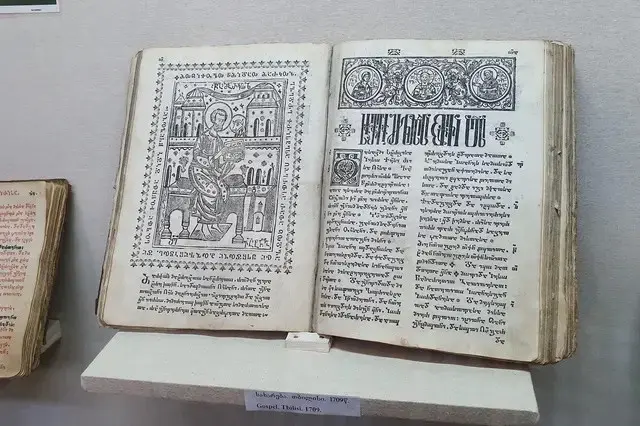
M17: Manuscript Studies & Contemporary Literature
Manuscript Studies is the academic discipline concerned with the material, formal, textual, and historical analysis of texts transmitted in manuscript form. It examines manuscripts as cultural artifacts and as carriers of texts by systematically indexing aspects such as writing material, script, layout, binding, production, usage, context of transmission, and provenance. The objective of manuscript studies is to reconstruct the origin, function, transmission, and reception of handwritten texts and to make them accessible for philological, historical, theological, and cultural-scientific research questions.
Contemporary Literature refers to the field of literature associated with the immediate present, generally encompassing texts from the late 20th century to the current day. It is characterized by the literary reflection of current social, cultural, political, and religious experiences and stands in close connection with its respective contexts of origin and reception. In the humanities and cultural sciences, contemporary literature is understood as an open, dynamic field of research whose temporal boundaries are not strictly fixed and whose analysis requires particular methodological sensitivity toward contemporaneity, self-reflexivity, and ongoing canon formation.
Manuscript Studies & Contemporary Literature in the MA Eastern Christian Studies
The module M17: Manuscript Studies & Contemporary Literature consists of two learning units:
- M17.1: Between Scriptorium and Printing Press: Manuscripts and Books as Cultural Media in the Christian East (2 ECTS)
- M17.2: Eastern Christian Themes in Contemporary Literature (1.5 ECTS)
The required assessment is the cataloging of a manuscript (1.5 ECTS).
The module comprises a total of 5 ECTS.
Contents
- History, materiality, and typology of manuscripts of the Christian East
- Introduction to paleography, codicology, and textual criticism of Eastern writing traditions
- Cultural history of the book and printing in the Near East and Slavic countries, including the Venetian printing centers
- Development and function of ecclesiastical, liturgical, and theological book production across different eras and linguistic regions
- Illuminated manuscripts as art objects: iconography, style, materiality, and liturgical use
- Production, design, and material analysis of manuscripts (parchment, paper, ink, binding)
- Manuscript transmission and its significance for the theology, liturgy, literary, and intellectual history of the Christian East
- Introduction to international cataloging and editing standards (e.g., TEI)
- Use of digital tools and databases for manuscript research
- Overview of the most important manuscript libraries and collections in the East and West (Jerusalem, Cairo, Sinai, Rome, Vienna, St. Petersburg, London, Venice, Paris, Vatican, among others)
- Belletristic, essayistic, and lyrical literature by Eastern Christian authors
Learning Objectives and Competences
- Students possess in-depth knowledge of the history, materiality, and transmission of manuscripts of the Christian East.
- They are familiar with the most important writing traditions and book cultures of the Eastern Churches and can situate them within their historical and cultural contexts.
- They are able to describe and analyze manuscripts with regard to script, layout, paratexts, material, binding, and colophons.
- They are familiar with the fundamental principles of manuscript cataloging, editing practices, and digitization.
- They can confidently handle academic resources such as manuscript catalogs, online databases, digital repositories, and paleography handbooks.
- They recognize the significance of manuscript transmission for the theology, liturgy, literary, and cultural history of the Christian East.
- They can critically interpret contemporary texts by Eastern Christian authors (fiction, essays, poetry, diaspora literature, etc.) in light of their historical, denominational, linguistic, and cultural contexts.
- They follow current debates on cultural heritage, identity, and memory culture, situating them within a broader intellectual and cultural-historical context.
M17.1: Between Scriptorium and Printing Press: Manuscripts and Books as Cultural Media in the Christian East
Course Instructor
N. N.
Academic Cycle and Workload
The learning unit is offered every winter semester. It comprises 2 SWS (= 1 ECTS) of digital self-guided learning (with synchronous meetings) and approximately the same amount of independent preparation and follow-up time (= 1 ECTS).
M17.2: Eastern Christian Themes in Contemporary Literature
Course Instructor
Dipl.-Theol. Joachim Braun
Scientific Coordinator and Manager des Eastern Christian Studies Online Campus
Catholic University of Eichstätt-Ingolstadt
![[Translate to English:] Braun](/fileadmin/_processed_/1/8/csm_Joachim_Braun_38d6078e58.webp)

Contemporary literature opens up a unique access to Eastern Christian themes because it directly connects lived theology,historical experience, and current social issues—it is precisely this that constitutes the special appeal of this particular course.
Contemporary literature opens up a unique access to Eastern Christian themes because it directly connects lived theology,historical experience, and current social issues—it is precisely this that constitutes the special appeal of this particular course.
Academic Cycle and Workload
The learning unit is offered every winter semester. It comprises 1 SWS (= 0.5 ECTS) of synchronous digital meetings and approximately twice as much independent preparation and follow-up time (= 1 ECTS).